


By Sarah Luddy
Langu Kabhula Explores Memory, Minerals, and Injustice Through Art.
Langu Kabhula says he talks about topics that deal with memories. He examines the history and collective memory within DRC, from the beginnings of colonialism through to the present neocolonialism, particularly focusing on the industry of mining. Kabhula is interested in how the past affects the present, which is why he has sought to understand the past.
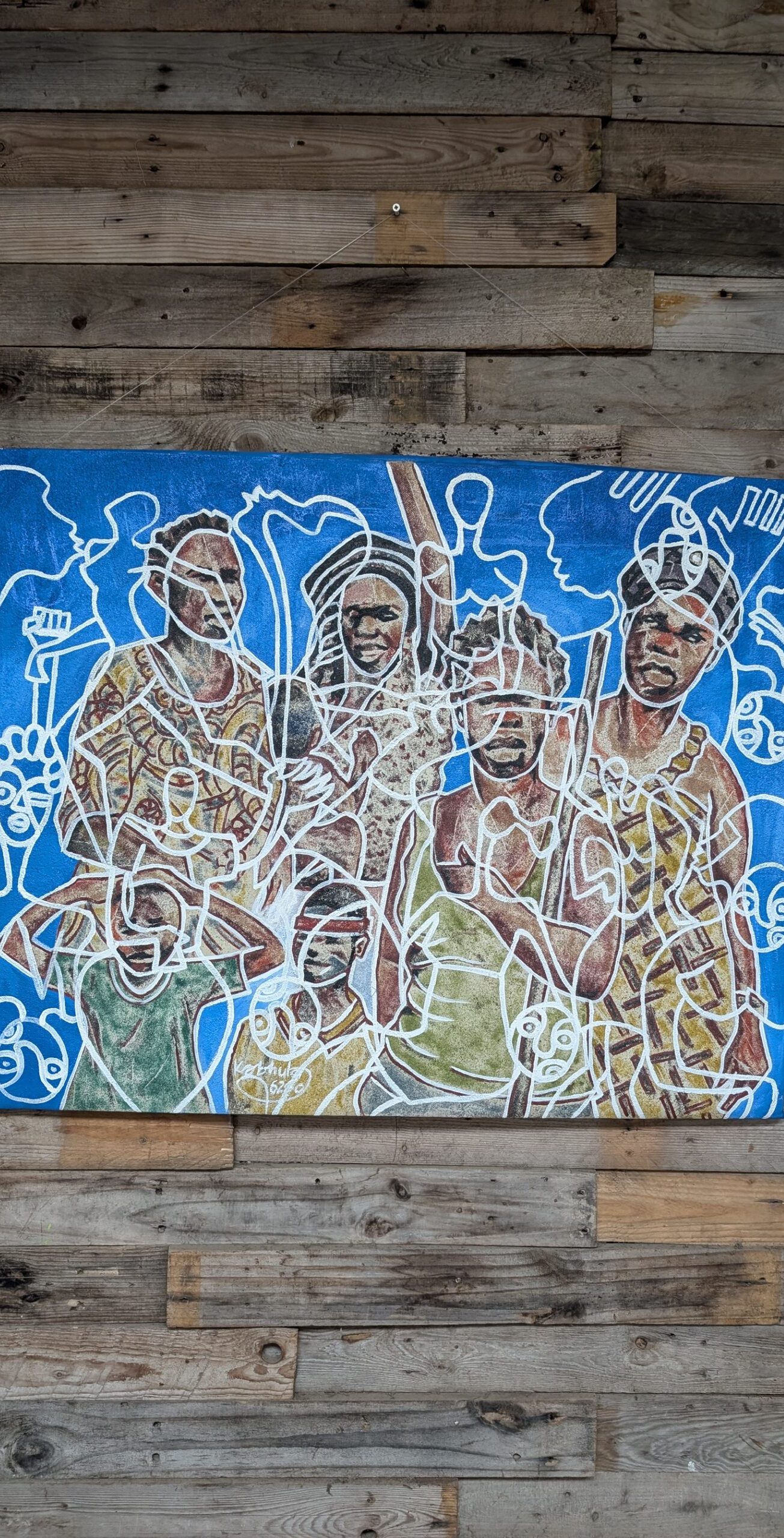
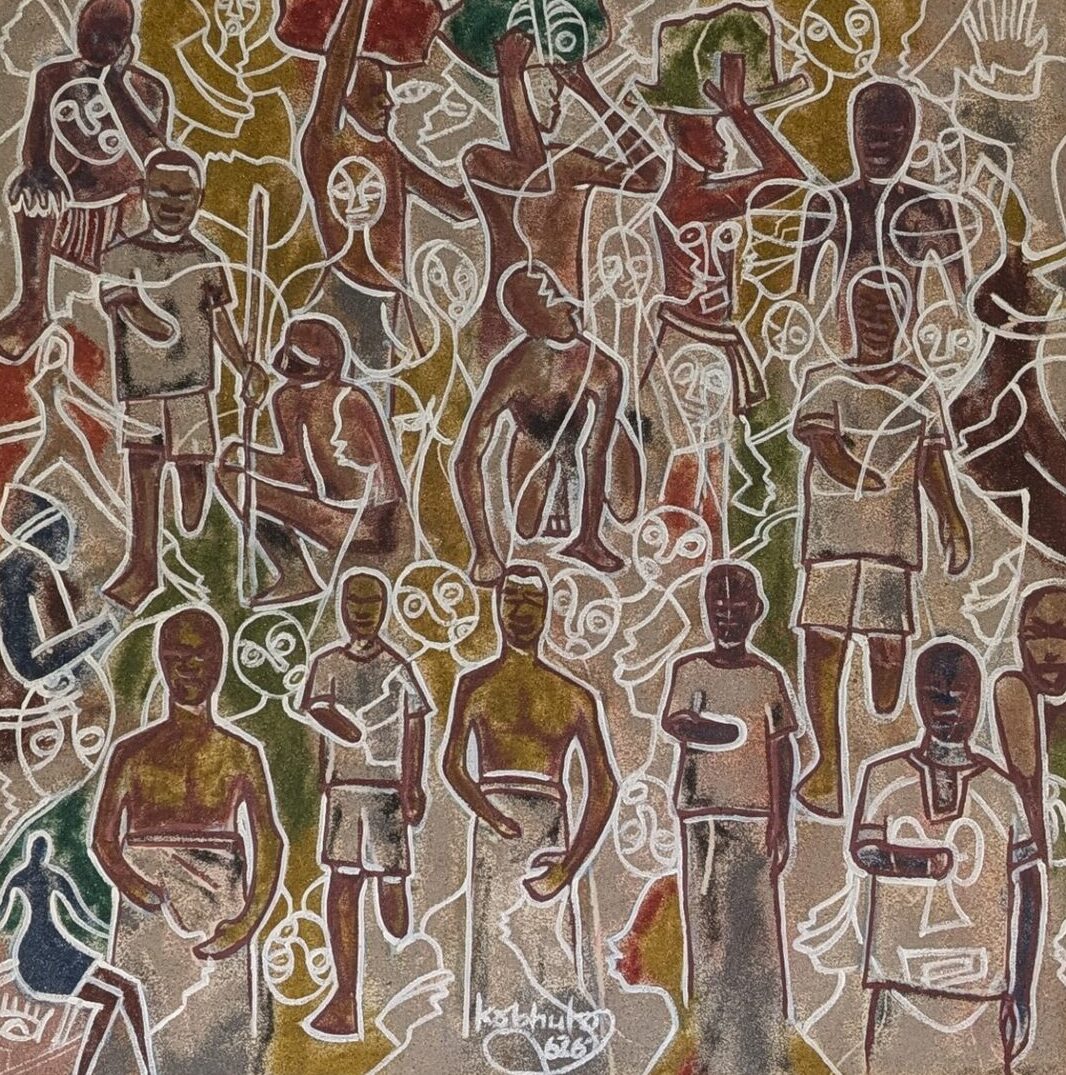
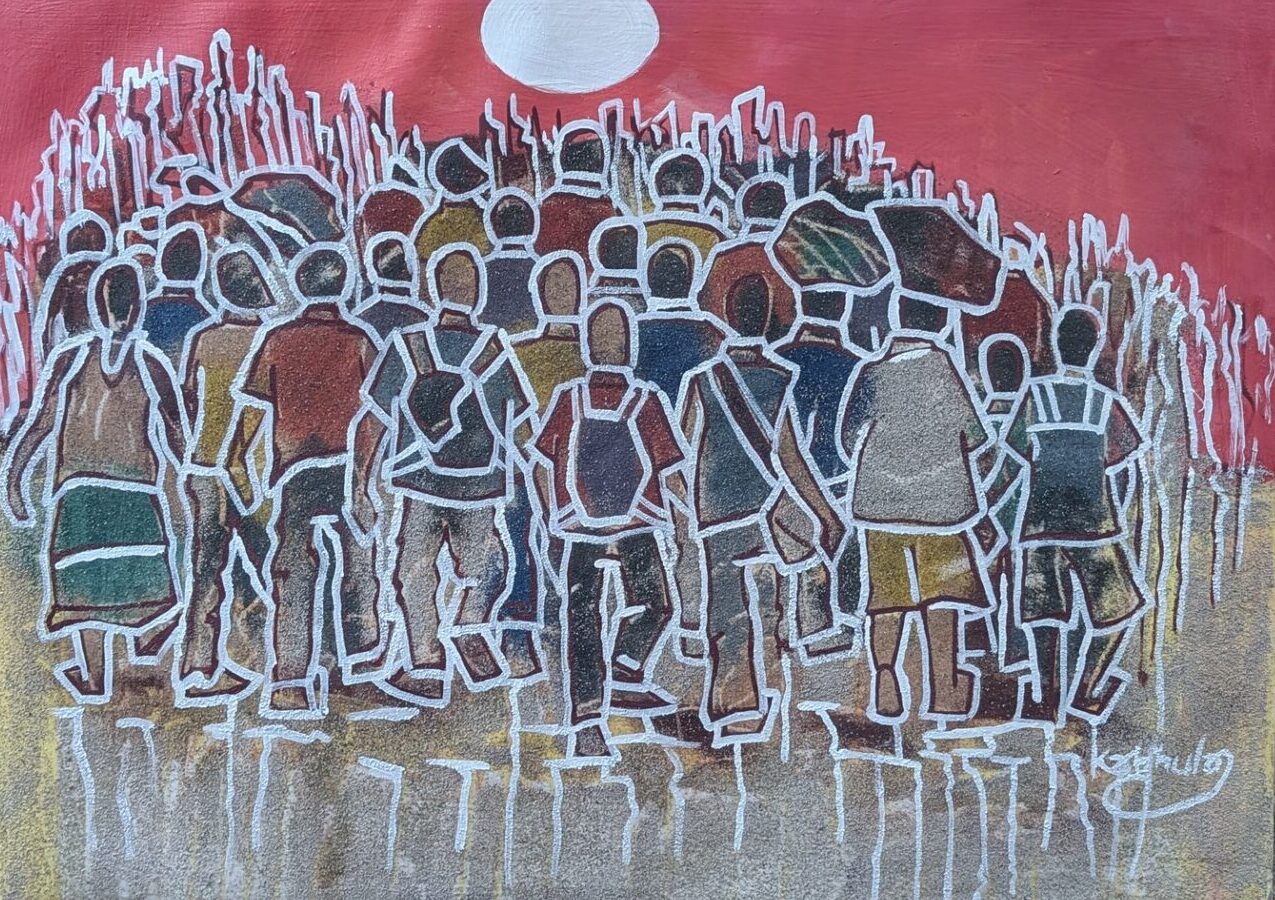
At just 24, the Congolese artist has already lived through war, displacement, and environmental injustice. His response is a body of work that confronts global systems of exploitation, built from the very soil that holds his country’s contested wealth – his works are made with pigment saturated sand, wax, and white lines that cut haunting silhouettes.
Raised in Goma, in eastern DRC, Kabhula grew up witnessing cycles of violence and instability. He didn’t formally train in art but began working in the studios of elder artists, just for a job. He observed and learned techniques and found a voice within himself. He developed a multi-layered practice that fuses figurative impressionism with African visual traditions.
Painting with Earth: The Creative Process
Kabhula’s process is as tactile as it is conceptual. He gathers natural sand, which he washes, sifts, and mixes with pigments to create a range of tones. Once prepared, the sand is affixed to canvas, paper, or wood, using clear varnish and wood glue. With palette knives, he carves silhouettes and lines, layering texture and meaning. The drying process can be long, sometimes requiring him to build fires to dry the works in the absence of sun. “The painting takes time,” he says, “but it needs time to speak clearly.”
For him, sand is more than a material—it’s a carrier of memory, representing generations, land, and erosion. “It brings images and stories. These minerals we extract, they come from the ground. I wanted to use the ground itself to speak.”
His canvases are populated by women carrying bundles, men carrying heavy loads. White lines cut across the works, superimposed starkly across the muted, earthy tones of the figures – images of masks and figures drawn from Congolese culture and raised fists of solidarity and resistance.
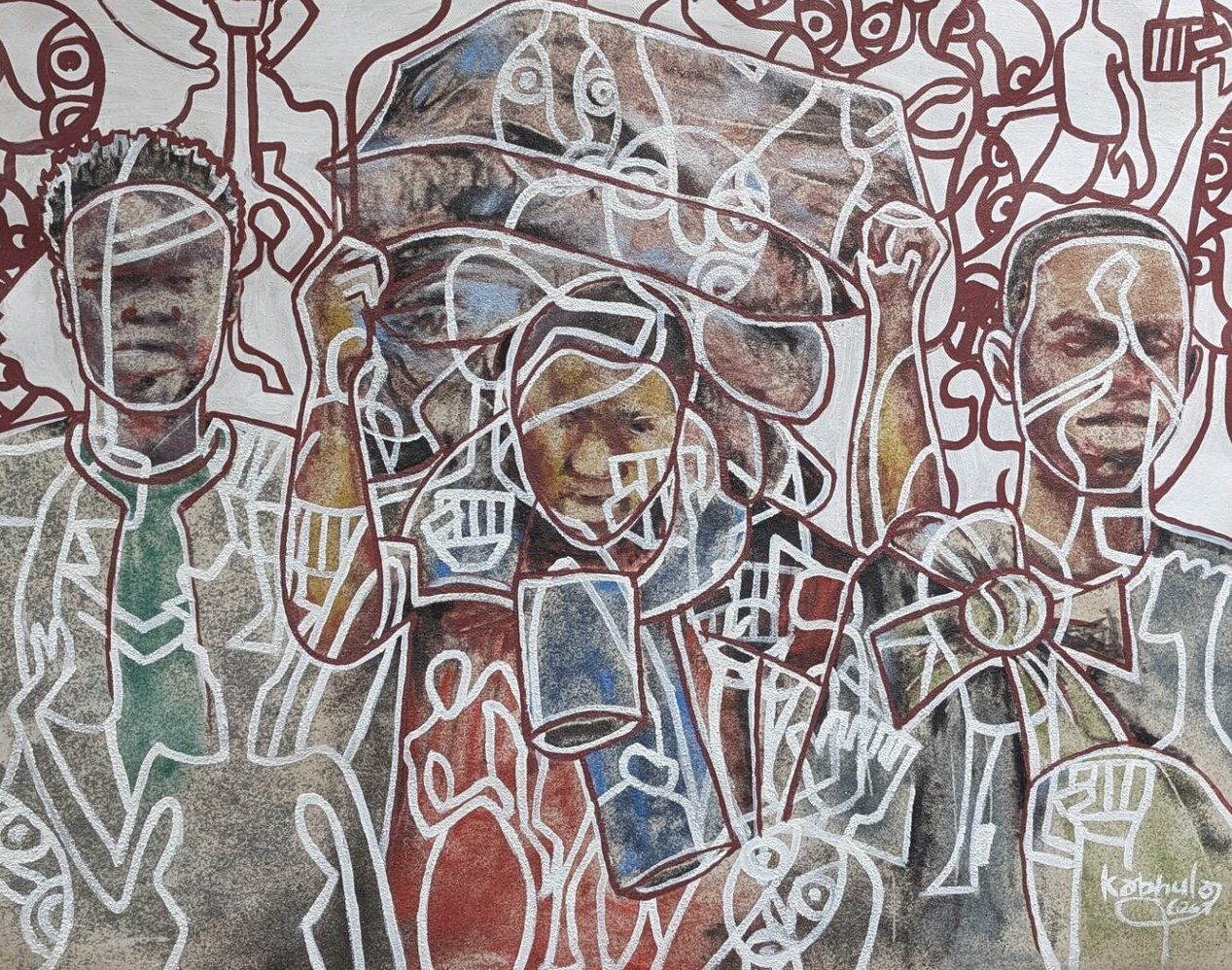
The white lines serve as thresholds between visible life and hidden systems. “They create a sense of melancholy,” he says, “but also show the power of resistance.”.
Kabhula has based images on places like the Shabara mines in South Kivu, which he visited before beginning this project. “I spoke with the workers,” he recalls. “They work without proper tools, under dangerous conditions. Many mining companies operate illegally, in complicity with governments.”
His paintings refer to the three historical phases of mining, tied up with colonialism and corruption. First, red rubber extraction in the colonial period, second, uranium that powered WWII bombs, and now cobalt, the precious mineral powering today’s digital and electric age.
Kabhula wondered aloud how many people in the world are aware of the dire conditions and level of exploitation in which cobalt is extracted. He wondered whether they are aware that DRC is the main source of the high quality cobalt needed to power all of our phones, tablets and computers.
Cobalt and the High Human Cost of Innovation
The DRC holds over 70% of the world’s cobalt reserves. Cobalt is essential for lithium-ion batteries, which are used in smartphones, laptops, and electric vehicles. As the world races toward “green” energy, demand for cobalt has skyrocketed. But behind the sleek marketing of sustainable tech lies a grim reality.


Cobalt extraction in the Congo is often marked by child labor, unsafe working conditions, and environmental destruction. Many miners work in informal “artisanal” mines without protective equipment, exposed to toxic dust and frequent cave-ins. Surrounding communities suffer from water contamination, soil degradation, and forced displacement.
“These wars we live through,” Kabhula says, “are connected to minerals. People destabilize regions to exploit them illegally. But no one talks about where these materials come from—or how the people who live there survive.”
Memory as Resistance
Through his art, Kabhula hopes to illuminate these entangled histories. He sees his work as part of a broader movement to reclaim Congo’s narrative, both culturally and economically.
“So much of our heritage fills museums in the West,” he notes. “But the creativity is still here. The stories are still ours to tell.”
Displaced by conflict in his home country, he first exhibited this collection in Kigali, Rwanda, and now shares it in Nairobi, where he has found temporary refuge.
Lango Kabhula’s solo Exhibition “Bearing Witness” curated by Sena Art Gallery is at Under the Swahili Tree, Karen through 31 July.