

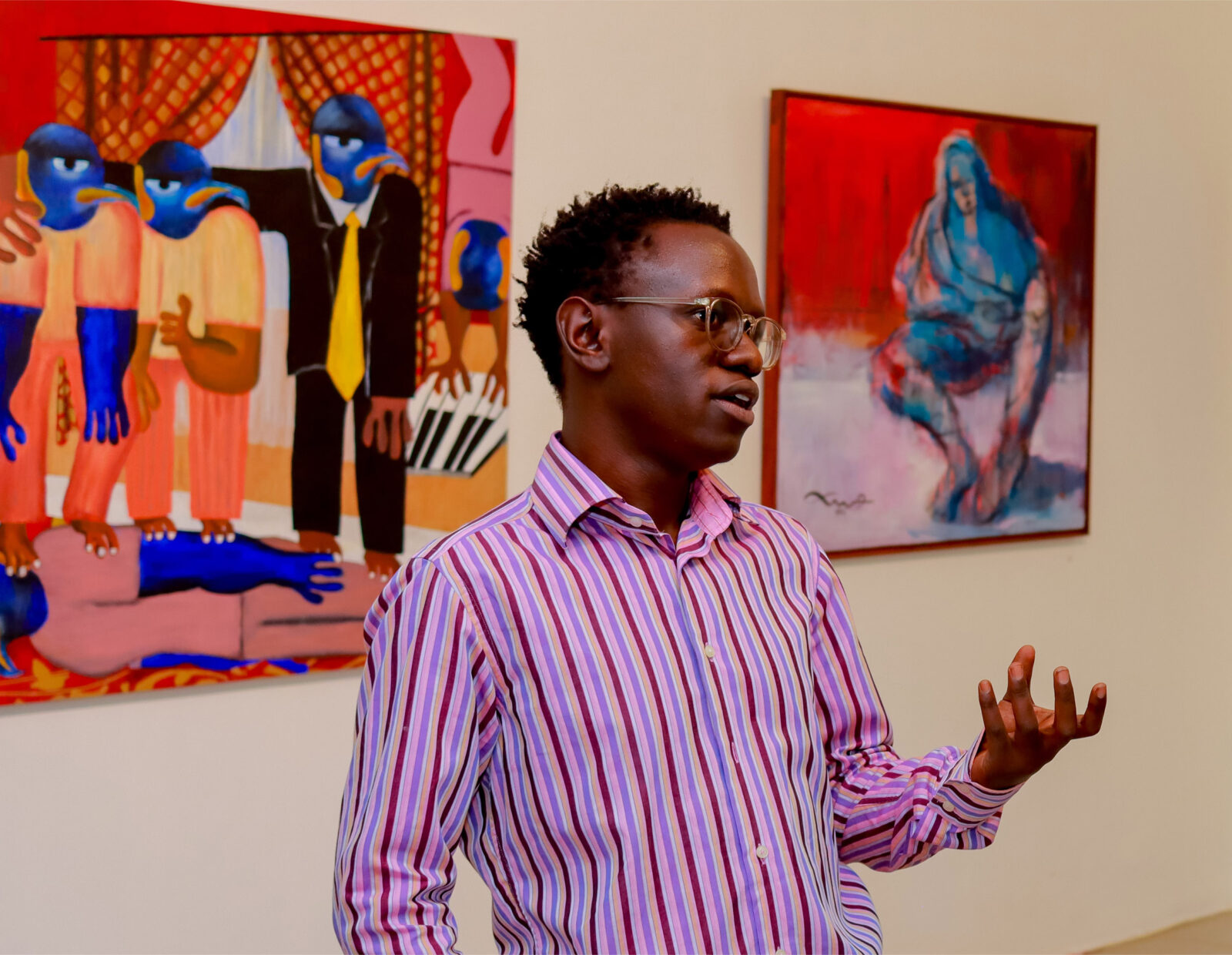

Independent Curator Thaddeus Wamukoya on East Africa’s Evolving Art Scene, Tewasart Gallery and the Power of Patronage
By Karen Chalamilla
Seven years ago, independent curator Thaddeus Wamukoya launched TewasArt and Patrons, a dynamic platform that bridges contemporary East African artists to a broader audience. Through it, he hosts and curates pop-up exhibitions for artists of varying mediums, catalogues their work in a digital gallery online called TewasArt Gallery, and publishes interviews and stories exploring the state of the African contemporary art scene on sister platform, TewasArt. This 360-degree coverage, so to speak, has allowed the platform to garner not only an East African but a global audience of artists, art writers, and art enthusiasts alike.
Before launching TewasArt and Patrons, Wamukoya worked as a gallery manager at Polka Dot art gallery in Nairobi for almost three years, a job that left him burnt out and eager for a different approach to engage with art. “Being a gallery manager at a traditional gallery can feel suffocating. You are not allowed to question things; you are not allowed to push things to another level.” Wamukoya wanted the freedom to innovate and take risks in his curation. “I didn’t want to keep working with the same established artists out of fear that newer names wouldn’t bring revenue; I didn’t want to keep doing things the same old way.”
Although TewasArt and Patrons’ heterodox methods have supported African artists and garnered an international audience, his platform has not been immune to challenges that art markets are currently undergoing. According to the Contemporary Art Issue, galleries worldwide are experiencing a significant market slowdown and an exponential rise in overhead in the last two years. TewasArt has encountered the same crisis. For Wamukoya, the solution to mitigating the structural challenges has been to move even further out of the box.
“I think now more than ever, we have to look to forming what some might call unlikely partnerships; the art scene has to connect with the corporate world so we can figure out how to keep having a meaningful impact,” he says.
With this approach in mind, TewasArt and Patrons is hosting a one-day event titled A Contemporary Art Affair: Emerging African Voices, the first of a series of events that invite artists, art workers, patrons, and corporate institutions to one table to discuss how to support the future of the East African art market.
In this interview, Wamukoya gives us insight into the platform he has built for the last seven years, the challenges hindering the East African art scene and A Contemporary Art Affair as a means to mitigate these challenges.
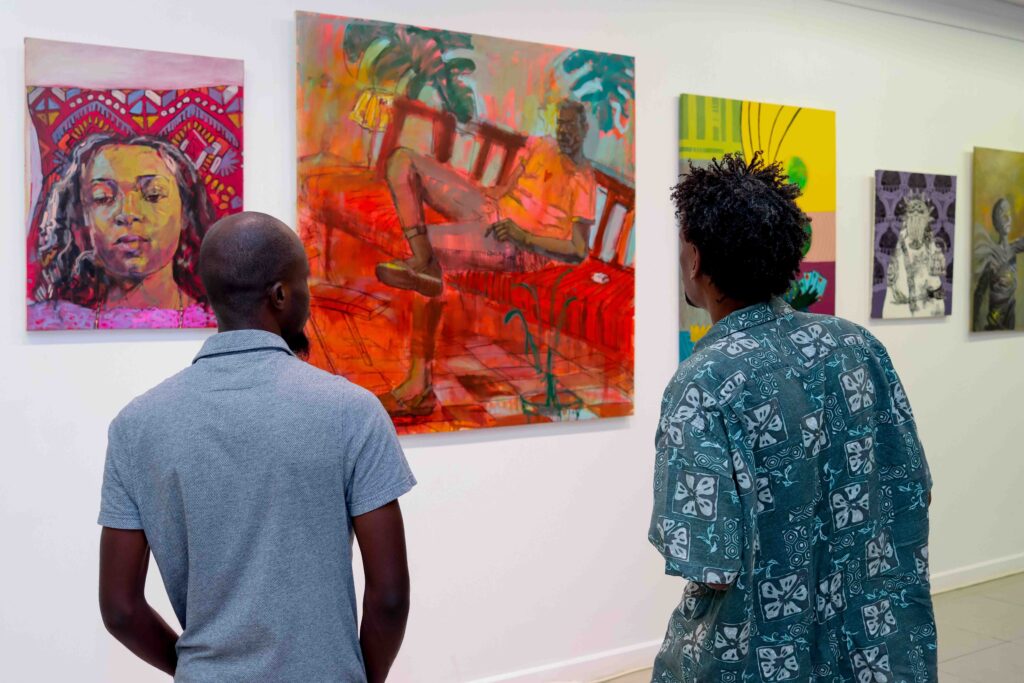
Image: Zyde.studios, Artwork: Courtesy of the artist and Tewasart Gallery
How would you describe the Nairobi art scene currently?
I would say that there are a lot of new players coming in. A lot of new galleries and new independent curators. Artists doing projects together as a way of keeping expenses low and to maximise getting clients into their studios. The rigid terms that many galleries have has made it appealing for artists to work on their own terms. Collectives like Kuona Artists, Seven Artists at Kobo Trust, Wajukuu Artists and Brush Tu Artists are organizing independent shows and open studios.
There has also been an existing tension between the main galleries, independent curators and artists that can be described as a shift of power. Collectors that have been buying from these big galleries are starting to find it more appealing to buy art directly from emerging artists and of course, this has changed the way people promote art. Instagram has become a vibrant marketing tool, artists are competitive in enticing collectors first before they can work with a gallery.
The other side of things is that non-art institutions are starting to pay attention and take interest in art. I&M bank for a long time existed in the market as a collector and they published a book. Red Hill Art Gallery also has an incredible collection that they have been showcasing and they are launching a book too. And there is the Art Auction East Africa by Circle Art, which has also been running online and at the gallery. There is also a lot of funding from the British Council for a lot of short-term projects that are mostly meant to offer mentorship. Alliance Française has been consistent with its exhibition program and live music performances, which is a crowd puller and Goethe-Institut supports experimental ideas and project-based exhibitions. The National Museum of Kenya, through its museum society, hosts the Affordable Art Fair 2 to 3 times a year. The question of who is benefiting from the initiative lingers, and the price cap of Kshs 150,000 can be limiting to established artists who wish to participate. The 33% commission is also too high.
There are also artist-led initiatives like Kairos Futura led by Ajax Axe, NCAI by Michael Armitage and Kamene artist residency by Kaloki Nyamai. They have established residency programs to support emerging artists and to stay relevant in the international scene. And then there’s the slow art sales. There are so many paintings in the studios. The sales that we used to experience two, three years ago are not the same. For many artists, it is a really frustrating time.
What has it been like to run TewasArt and Patrons for the last seven years?
I have mixed feelings. Growing a new clientele – and a lot of them being young collectors who I got to introduce to art – has been great. Before they would have to attend exhibitions and be hands on in keeping up with art studios, but through my platform – the online catalogs, newsletters and stories – they are able to easily engage with art. I have also supported careers by promoting new artists who have eventually made a name and a living for themselves. An artist like Muramuzi John Bosco, who I was fortunate to work with early in his career is now showcasing in Forster Gallery, Zanzibar. International galleries and platforms wanting to collaborate is a sign that people beyond Nairobi are recognising the work. But generally, I love being in a position where I am moving things in the Nairobi art scene, it feels like magic.
I can imagine. Has it been all good?
No. It is time consuming and I am often doing everything by myself. Meeting artists’ expectations is difficult. Whenever you have an exhibition, artists expect to sell. When that doesn’t happen, it can feel like it was on you. Also, many people in Nairobi have a rigid view of who an art dealer has to be; they have to be at a specific art gallery or have a physical space. But if you can’t afford one, there are other ways of pushing art; I have facilitated many online sales. Fitting into people’s expectations and trying to explain yourself can be draining. Another frustration is the funding. I have had to pause and reflect on how I can mobilise for support in running the platform.
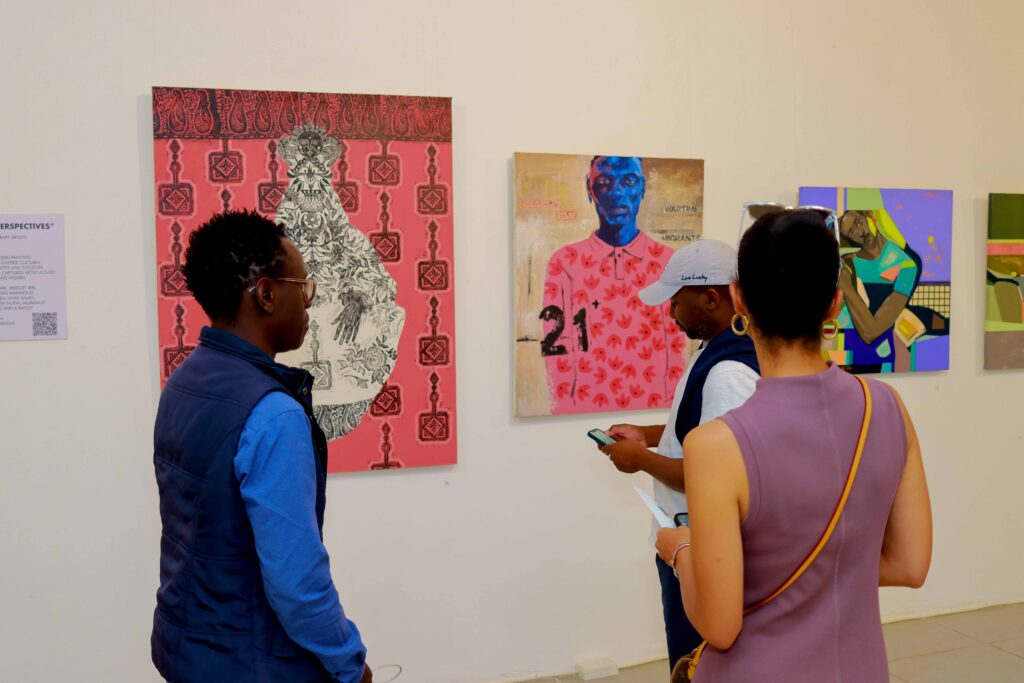
Image: Zyde.studios, Artwork: Courtesy of the artist and Tewasart Gallery
How is TewasArt and Patrons run currently?
We mostly depend on art sales and commissions. Sales have allowed us to publish online catalogs and share them with a community of patrons that I’ve built over the last seven years. Some are seasoned collectors, others are one-time buyers. But, it has been a huge struggle to sustain the platform. One of the challenges is that art sales have dwindled. The other is that there are not many spaces where you can rent at an affordable fee to host exhibitions, which pushes me to rent spaces in commercial malls. And of course, their business model engages visual creatives like any other profitable business. So much of the commission goes to renting space, after that, I’m left wondering where do I get money for shipping? Where do I get money to pay for assistance? You end up sinking in the overheads needed to sustain the business.
Why do you think art sales have dwindled?
I think one of the reasons is the political unrest we’ve been experiencing in Nairobi. There is also a new world order that is significantly reducing funding that goes into art and cultural institutions all over the world, and this has affected the African contemporary art scene. The economic state of the world has also affected personal priorities when it comes to finances. Art is not of much importance to people in the hierarchy of needs or wants at the moment. People would much rather travel or buy a house or new car.
I imagine that makes it very difficult to build a culture of appreciating and collecting art?
Absolutely. Most of the people who buy from me are seasoned collectors who are buying as an investment, probably to resell, and they tend to follow the trends. So, they only buy recognized names, which makes it difficult to sell work by up-and-coming artists. The other buyers are expats who are just moving to Nairobi, and they have empty walls that need art. They usually only buy once and rarely come back. It becomes very hard to grow a culture of collecting when there is limited interest either in art in general or in the lesser-known artists.
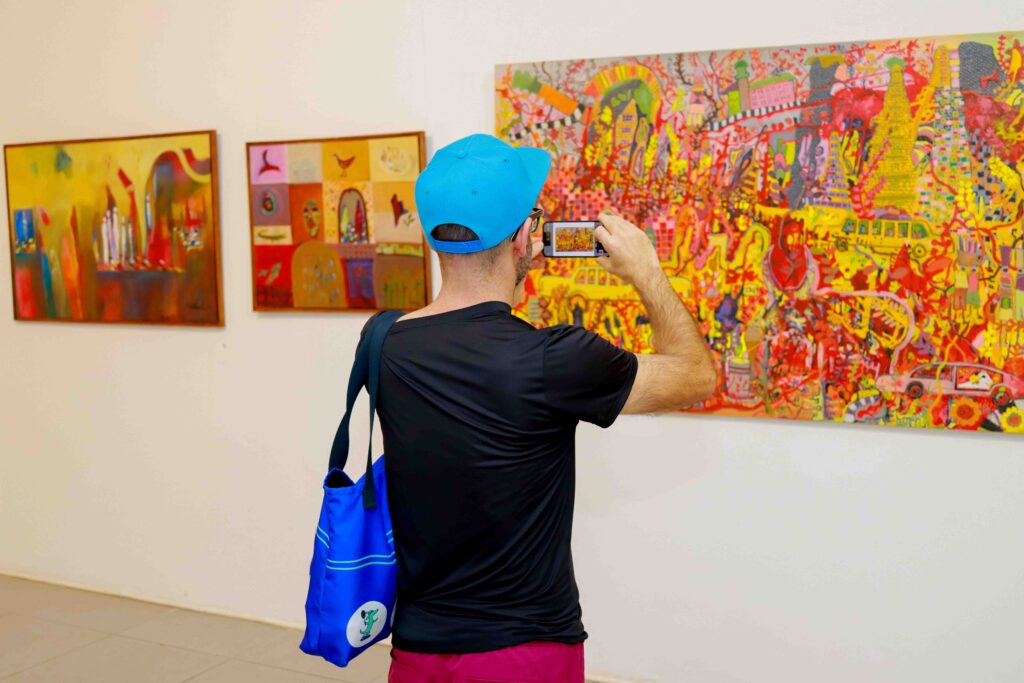
Image: Zyde.studios, Artwork: Courtesy of the artist and Tewasart Gallery
Tell me a little about the event you are hosting, A Contemporary Art Affair: Emerging African Voices, in partnership with Trademark Hotel.


I realise that for my business to be sustainable and continue serving the art world, the model needs to change. The interest from artists on the continent is certainly there; they ask me if I have a physical space, or if they can come to visit Nairobi and do some work here. Some of them are willing to pay for their transport; they just need to come and be part of a program. I’m thinking of how I can expand what I’m doing into something that can benefit more artists from the continent. I don’t need to have my own residency because there are already existing spaces and artist-led programs doing great work that I would love to collaborate with. But they also tend to have structural problems like not hosting enough exhibitions to showcase and sell work so they can sustain themselves, or not enough funding to put together said exhibitions. There are art spaces outside of Kenya that have been able to work around these issues, and it would be great to build relationships with them that allow artists – seasoned as well as up and coming – to move around and get exposed to different art ecosystems. But for these relationships to work, they need to be grounded in a business model that is reliable and does not rely on unpredictable art sales.
What might this alternative business model look like?
I’ve realized that the corporate world has always been an alternative solution to some of our funding problems, but there is no bridge between the art scene and corporate institutions. Safaricom, for instance, has shown an interest in supporting social enterprises. How do we position ourselves to benefit from these institutions? How can we involve these institutions in building a framework that can sustainably support artists without compromising on integrity? And that is what led me to think about A Contemporary Art Affair: Emerging African Voices, an event that invites key players in the contemporary art world in East Africa; curators and gallerists, members of the corporate world, and artists that I’ve been fortunate to work with. The idea is for us to come together and start a conversation on shaping the future of art in the region and bridging the gap. A residency program is something we are keen on, but there are also other ideas I think would be good to expand on eventually.
What are some of those ideas?
One at the top of my mind is introducing an internationally recognized art fair concept, like 1:54 or Art X Lagos, to Nairobi. We had one the Kenya Art Fair a few years ago, and it was fully sponsored by Sarit Center, Textbook Center, Safaricom, and other corporate brands. They would commit a couple of million shillings to the initiative, and part of that was prize money to award-winning artists. GoDown Art Center used to have the Manjano Art competition, whose award was also prize money. These initiatives make a huge difference to artists.
Many in the contemporary art world consider art fairs to be a little outdated. What would make this one different?
You know, as much as other art scene models are tired of art fairs, I believe Nairobi still needs one. We need an event every year that people look forward to, where everyone can come and spend on art – the intentional marketing and the buzz – it will go a long way to building a culture of collecting. I get it, art fairs get old because people start promoting the same names, and they hike prices to an unreasonable degree. But we need to do everything we can to encourage people to engage with and buy art.
What do you envision the next steps to be after the inaugural A Contemporary Art Affair: Emerging African Voices event?
I envision a commitment to collaborate and network, and a commitment to co-building a long-term business model that will help support artists. I want this to be part of a series of events, where key stakeholders frequently meet to keep pushing the East African art scene.
For event booking/reservations: https://www.ticketsasa.com/events/a-contemporary-art-affair-emerging-african-voices
https://mookh.com/event/a-contemporary-art-affair-emerging-african-voices/
About the Author
Karen Chalamilla is a culture writer and researcher based in Dar es Salaam, with a keen interest in African art and (pop) culture. Her work explores art in all its forms, against political and identity considerations including race, gender, sexuality, and class.