


A World Reversed: Isabel Herguera’s Sultana’s Dream and the Politics of Imagination
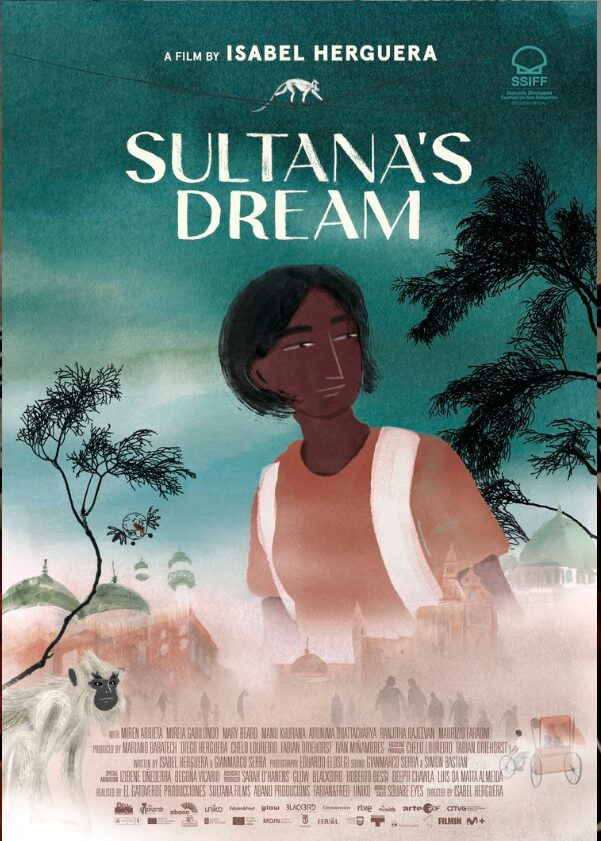
There’s a moment early in Isabel Herguera’s Sultana’s Dream when a book, a small, unassuming, nearly forgotten book, changes the course of a woman’s life. The woman is Inés, a Spanish artist living in India. The book is Sultana’s Dream, Rokeya Sakhawat Hossain’s 1905 feminist novella, written in English in colonial Bengal, and long buried beneath the dust of literary obscurity. From this chance encounter, Herguera constructs a layered, meditative, and gently radical animated feature that moves fluidly between dream and memory, politics and poetry.
The film—Herguera’s feature-length debut—could have easily been a mere homage to a historical text, but it does something far more delicate and ambitious. It becomes an exploration of transhistorical kinship: between women, between art forms, between imagined futures and remembered pasts. Inés, the protagonist, wanders through India and through her own emotional interiority in search of Ladyland, the mythical matriarchal utopia described by Rokeya—a place where women rule with wisdom and science, and men live in purdah.
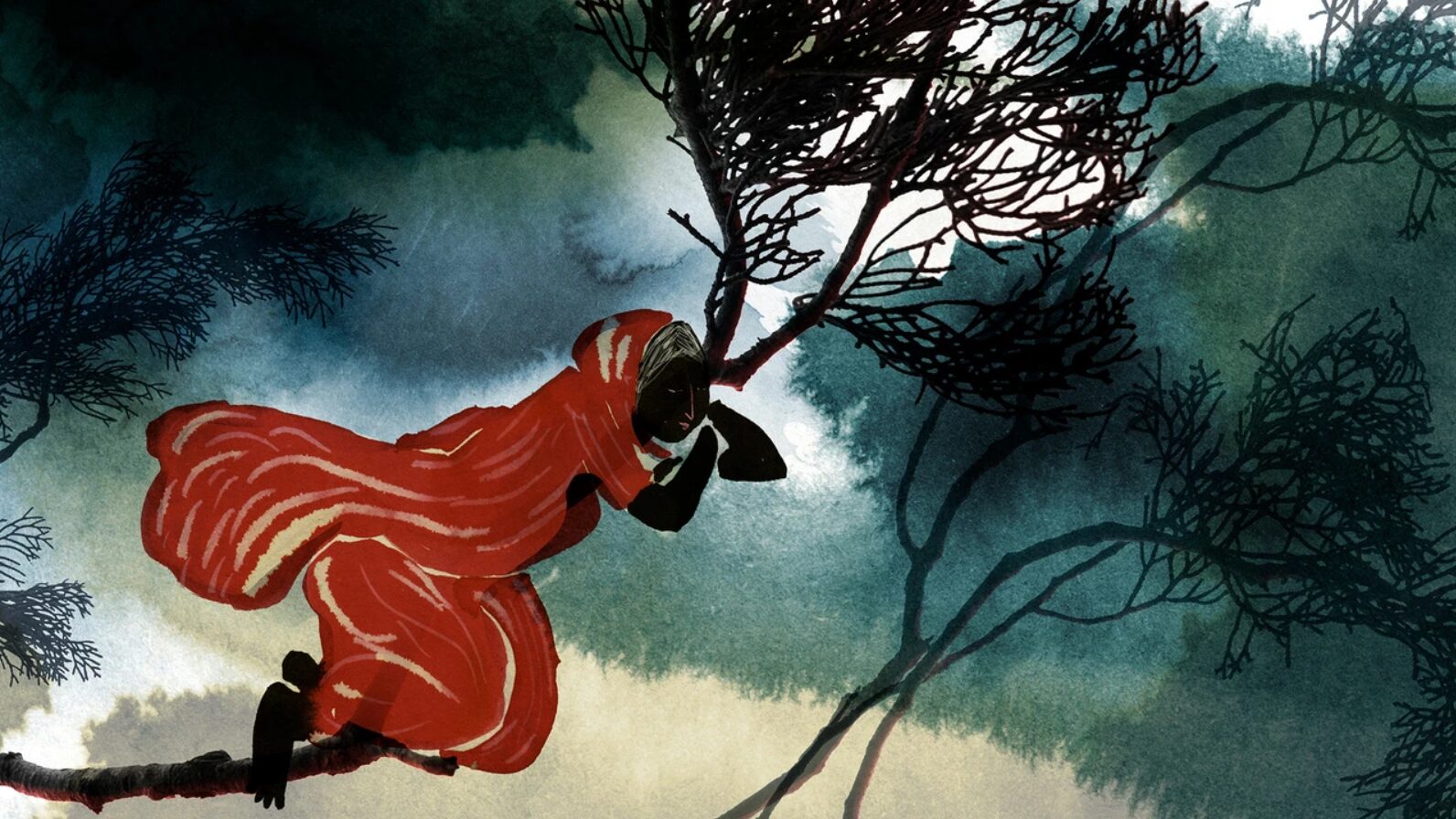
Herguera renders these layers with three distinct animation techniques: loose watercolors sketch Inés’s present-day world; intricate shadow puppetry evokes Rokeya’s turn-of-the-century life; and the sequences set in Ladyland unfold in elaborate mehndi-inspired motifs, suggestive of both adornment and insurgency. The visual strategy is not merely aesthetic. It is epistemological. Each style speaks its own language, telling us something about whose story is being told, and how.
But Sultana’s Dream is not content to be just visually enchanting. It is, at its core, a film about the uneasy distance between vision and reality, between the imagined world and the lived one. The partition of India, the repression of women’s voices, the quiet erosion of memory—these shadows loom large. Herguera does not dispel them. Instead, she allows them to coexist with the dreamscape, as if to suggest that utopia is not an endpoint but a flickering possibility, glimpsed only through art, or accident.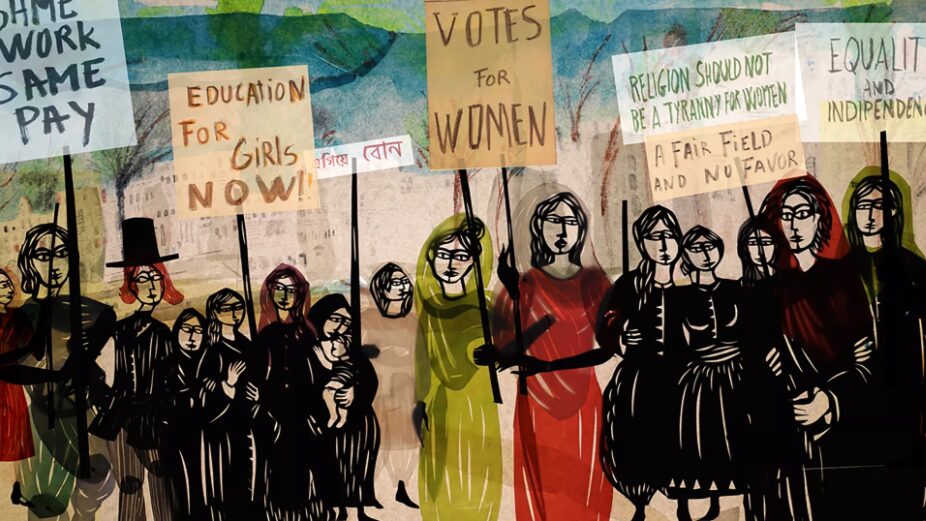
Inés is a curious protagonist: aloof, slightly melancholic, often observing rather than acting. Her detachment is less a flaw than a mode of inquiry. She is not on a hero’s journey, but a pilgrim’s drift—through archives, through stories, through the fragmented geography of feminist imagination. Inés’s gaze is often critiqued in postcolonial discourse, but Herguera wields it thoughtfully, not to appropriate, but to witness. The film is not about discovery, but resonance.
If the film feels sometimes slow, or diffuse, it is by design. Like a long-lost letter read slowly, or a remembered lullaby half-forgotten, Sultana’s Dream resists the capitalist tempo of most animation. It moves with the pace of contemplation. And yet it is never dull. Every frame shimmers with care, every voice echoes with longing. It is a film that understands that softness can be subversive.
One leaves Sultana’s Dream not with answers but with echoes. What does it mean to imagine a world without male violence? What happens when women not only survive but thrive, unburdened by patriarchy’s architecture? What stories, what science, what futures might emerge?
In a time when dystopias are in vogue and resistance is often branded as spectacle, Sultana’s Dream offers something quieter, and perhaps more unsettling: a vision of peace. In Ladyland, there are no grand battles, no revolutions, no scorched-earth finales. Just gardens, solar energy, contemplation. It is not a world turned upside-down—it is a world righted.

And that, perhaps, is the film’s most radical gesture.
Sultana’s Dream is playing through July at Unseen Nairobi
Tickets are available on Mookh
WATCH THE TRAILER