

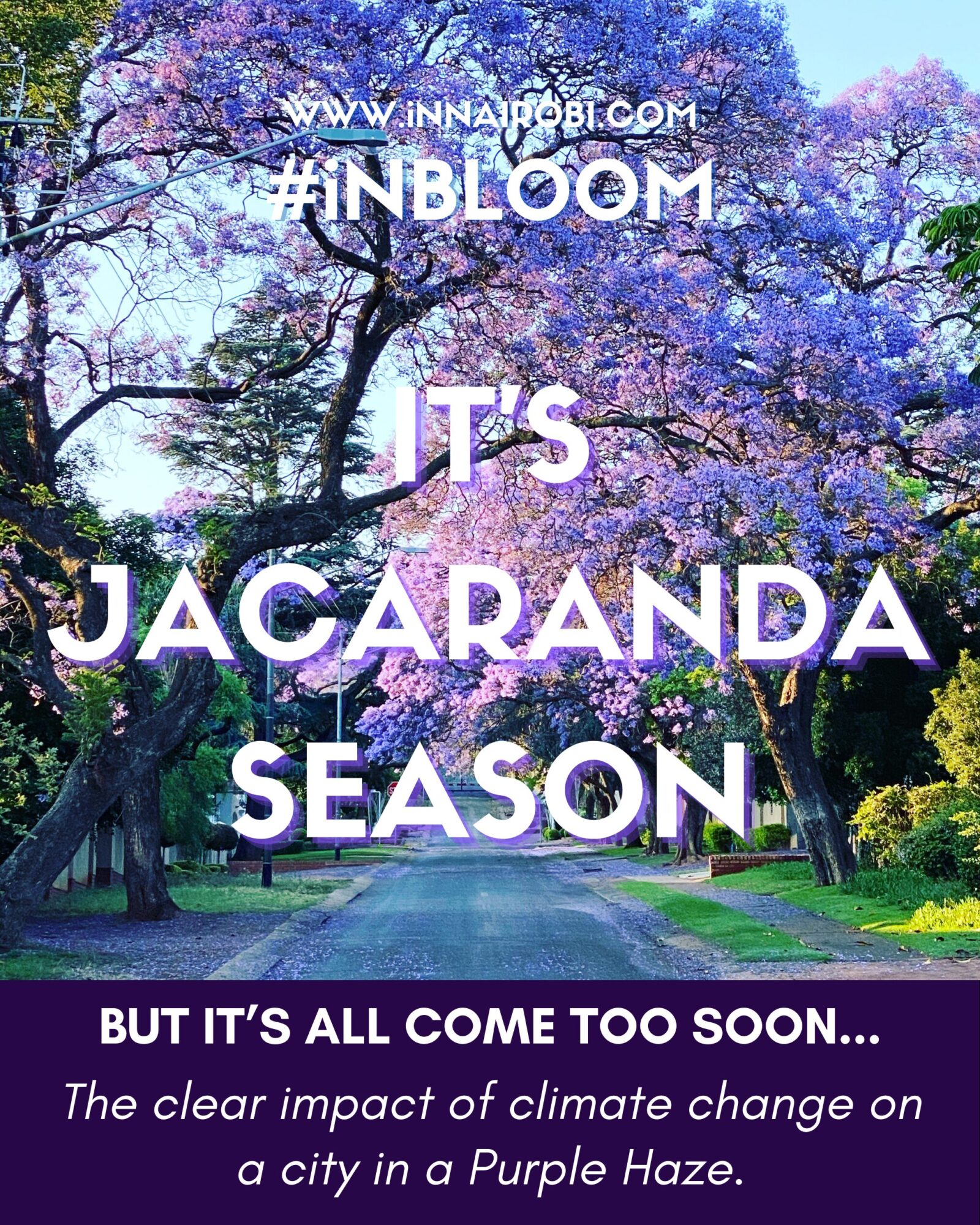

When Nairobi Turns Purple
By Nik Jackson
On certain October mornings, Nairobi seems to belong not to its people or its traffic or its relentless construction, but to a tree. The jacaranda, with its soft, trumpet-shaped blossoms, casts whole avenues into a purple haze. The effect is disorienting and enchanting, as if the city had been dipped in dye overnight. Pedestrians pause to photograph the bloom, schoolchildren kick their way through violet carpets, and Instagram fills with the hashtag #JacarandaPropaganda—a tongue-in-cheek rallying cry that is as much about beauty as it is about loss.
For Nairobians of a certain generation, the sight of jacarandas in flower is also a mnemonic trigger. The trees bloom in sync with the academic calendar, arriving just as national exams begin. The anxiety of KCSE revision—the late nights, the radio static, the smell of cheap ink on past papers—mingles with the memory of blossoms drifting outside the classroom window. To this day, many adults recall their teenage years through a haze of purple.
A Colonial Import That Took Root
The jacaranda is not Kenyan. It was carried across the seas from South America in the early 20th century, likely introduced by British administrators looking to “beautify” their settlements. One account attributes the first planting to 1918, under the watch of colonial officer C. W. Hobley. Whether or not the story is precise, the fact remains: Nairobi’s purple corridors were part of a larger colonial aesthetic project, in which non-native trees—from bougainvillea to eucalyptus—were deployed as symbols of order and civility.
And yet, what was once an import has long since naturalised into Nairobi’s cultural imagination. Hotels, maternity wards, and schools carry the jacaranda name. Couples choose to wed under its blossoms; poets slip it into their verses. The tree, once ornamental, has become emblematic.
The Season of #JacarandaPropaganda
The flowering itself is a paradox: spectacular, but fleeting. In good years, the blooms are lush and long-lasting, spreading over Kenyatta Avenue, Uhuru Highway, Ngong Road. In weaker years—2022 was one—residents complain of a “poor show,” the blossoms muted by unseasonal rains or strange heat patterns. Climate variability is rewriting the rhythm of the tree.
As Nairobi’s skyline fills with cranes and bypasses, many of the old jacaranda corridors have disappeared. The once-grand canopies of Nyerere Road or parts of Ngong Road were felled for expansion. In their place: asphalt, guardrails, and concrete dividers. #JacarandaPropaganda, then, is more than a seasonal Instagram trend. It is a grassroots act of documentation, an insistence on noticing beauty before it vanishes, and a critique of the city’s tendency to eat its own shade.
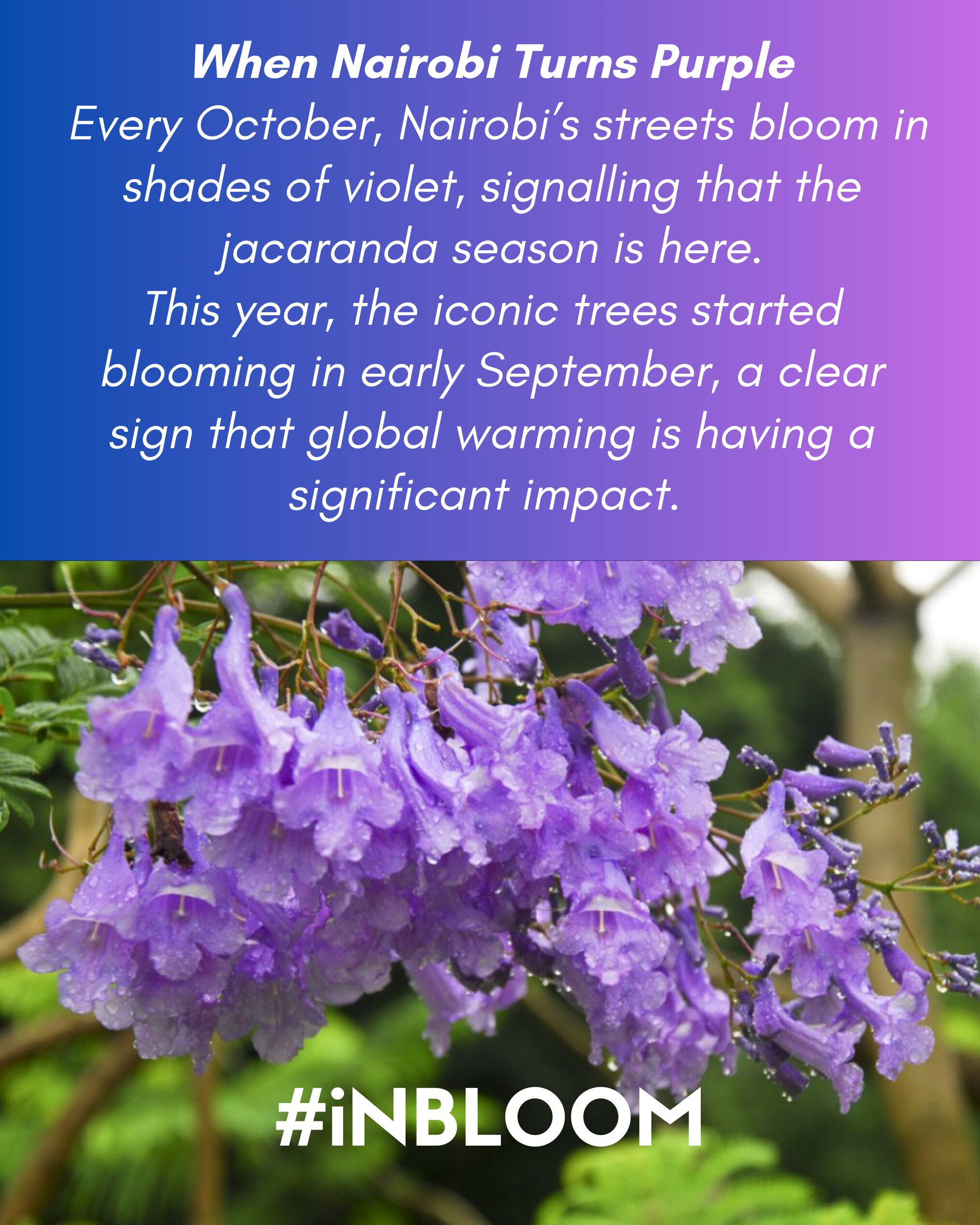
In 2025, Nairobi’s jacarandas told a different story. Instead of their usual October crescendo, the trees began blooming weeks earlier, with scattered purple canopies already visible in mid-September. By late October, many avenues were bare again, the blossoms spent. Ecologists pointed to the unseasonably high temperatures and erratic short rains—both signs of a shifting climate—as possible triggers. The jacaranda, once a reliable calendar of the city’s seasons, has become an uneasy barometer: a reminder that even the beauty we take for granted is being rewritten by climate change.


What the Tree Gives, and What It Cannot
Ecologists point out that the jacaranda is a non-native, naturalised species. It is not invasive in Kenya in the way lantana is, but it does not belong to the indigenous fabric either. Conservationists now encourage planting local purple-flowering species such as Cape chestnut, which support native biodiversity. And yet, the jacaranda still serves. It cools Nairobi’s blistering avenues through shade and transpiration. It feeds bees. Its pale timber finds its way into carvings. It makes a city, otherwise choked, briefly habitable.
There is also something psychological at work: the blossoms mark a passage of time in a city that too often feels timeless in its chaos. To witness jacarandas blooming is to know where one is in the year, to measure Nairobi not just in traffic jams or political scandals, but in seasonal colour.
The Purple Present
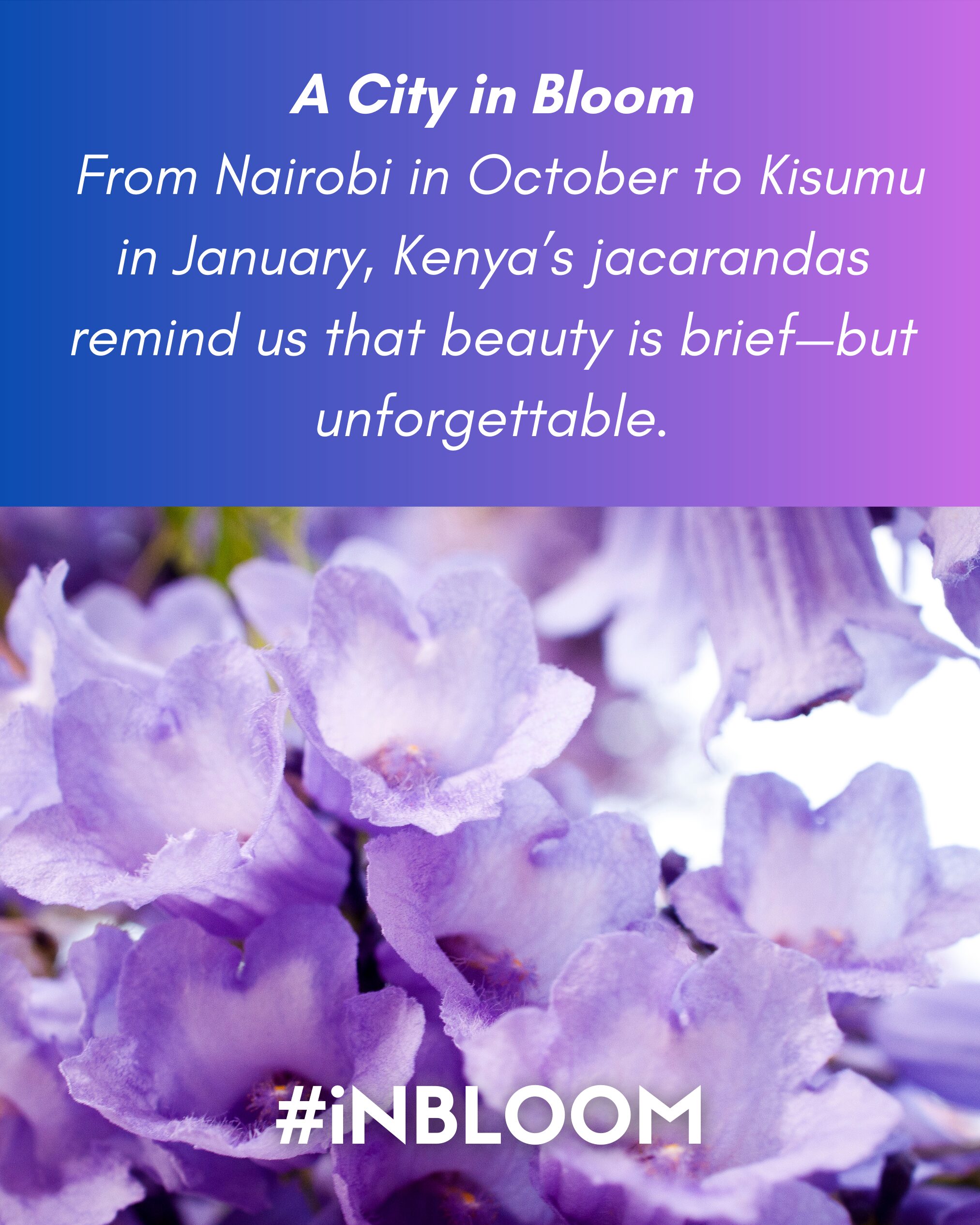
Drive today through Milimani in Kisumu in January, and the jacarandas bloom again, out of sync with their Nairobi cousins. Visit Nakuru in early November and you will find roads lined with violet flame. Across the highlands, from Nanyuki to Nyeri, the trees have stitched themselves into Kenya’s geography of beauty.
And still, the question lingers: should a city so desperate to re-green itself continue to rely on a South American immigrant? Or is there room for both—the old colonial plantings, heavy with memory, and new corridors of indigenous trees that restore what was lost?
In the end, Nairobi may not have to choose. Trees, after all, are long-lived witnesses. The jacarandas lining State House Road today were likely planted by hands long gone. They have seen the city swell from dusty colonial outpost to sprawling, frenetic metropolis. They have shaded exam-takers, lovers, presidents, and protestors. And each October, for just a few weeks, they remind Nairobians of the fleeting miracle of beauty in a city forever in motion.