

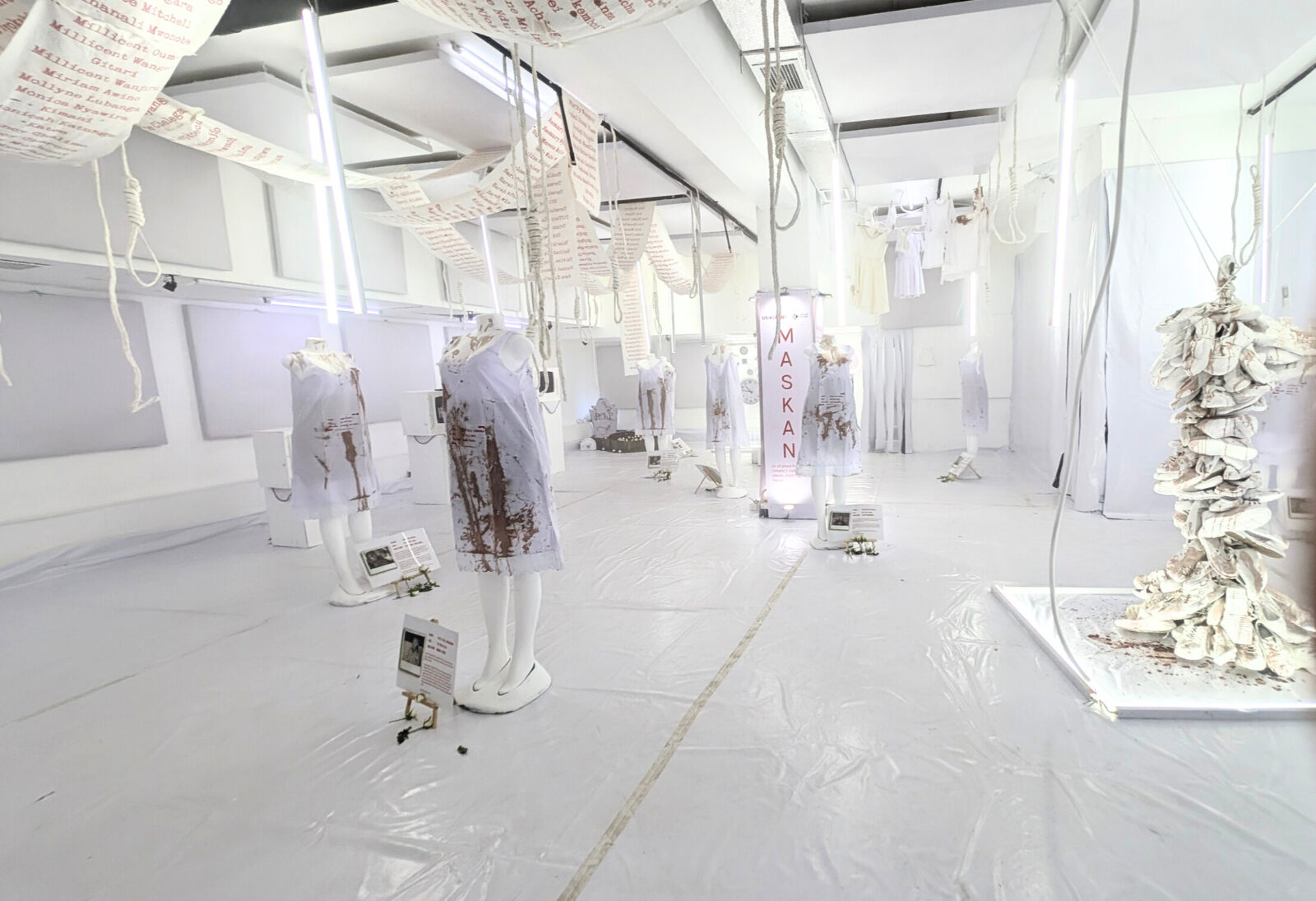

You walk into a room filled with whiteness. Even the air appears white and hazy, like you are in a fog. The space feels ethereal and otherworldly. The room is populated with mannequins in white nightgowns. The nightgowns are splashed with brownish liquid. As your eyes adjust to the overall whiteness, you notice (white) hangman’s nooses dangling from the ceiling.
As you walk in you notice muddy footprints on the white floor, they lead to a desecrated mattress/couch against a wall. There are pasted newspapers peeling off the wall, which is scrawled with the word ‘Help”, in bright red, some of the only non-white material in the room. The bed is messy and is ugly in its mess. Among the tumbled blankets there is a body – a mannequin representing a body. A knife. The bed and the mannequin are splashed with brownish liquid which becomes reminiscent of the seeping and splattering of blood. This is a scene of violence. A crime scene. Yet, with flowers and a portrait at the head of the bed, it also feels like a shrine.
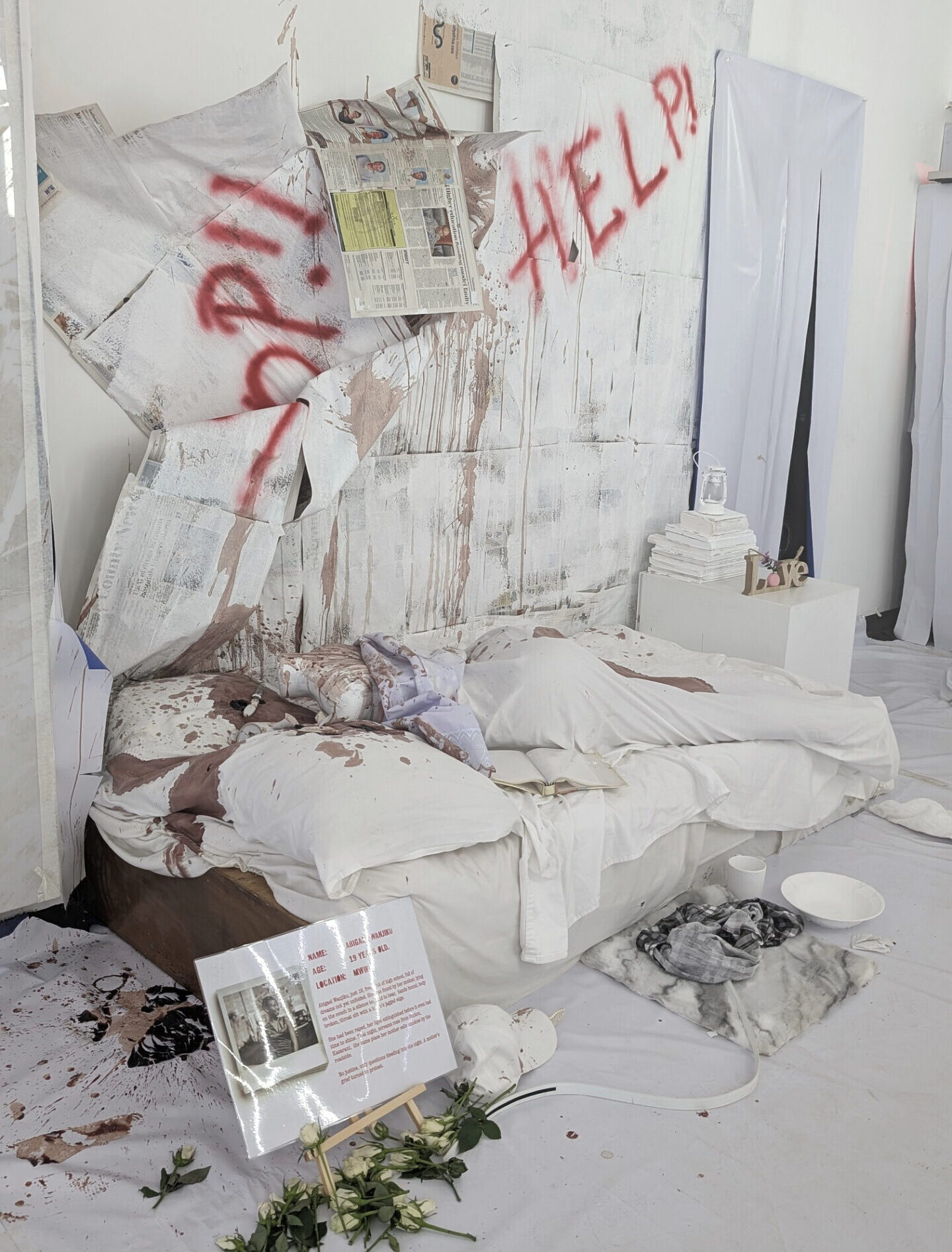
After spending time in the room, it becomes apparent that the whiteness can be seen as an allusion to heaven, to innocence and, foremost, to innocent death.
The mannequins around the room and on the bed represent women killed in Kenya. Each nightgown has a name, age and location stencilled on it, in red. At each mannequin’s feet is a framed portrait of a young woman, with a description of the circumstances of her violent death, and a scattering of white roses – tossed in a way that they would be tossed onto a casket as it is lowered into the ground.
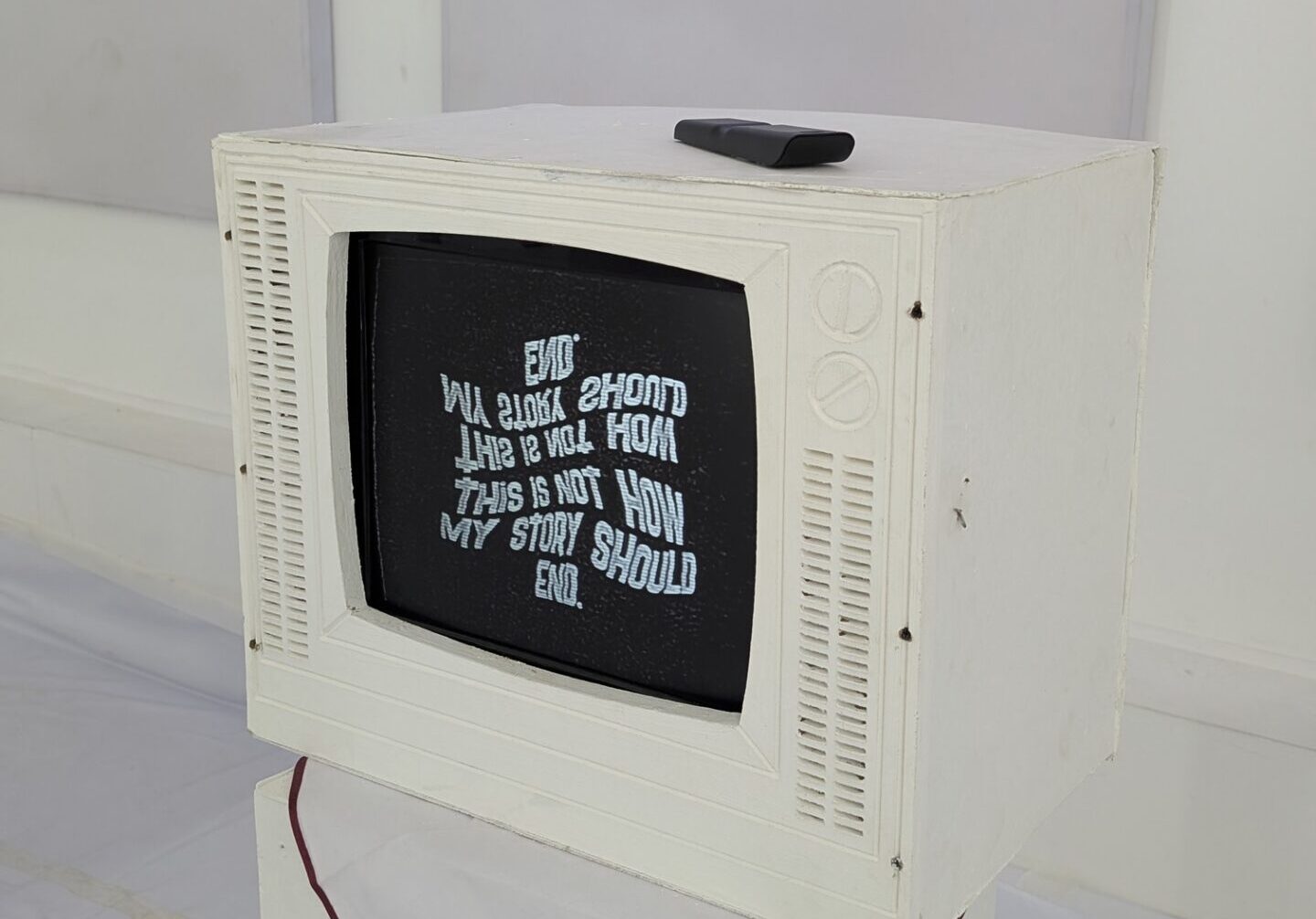
TVs flicker with words that may have come from the mouths of the victims: “Help me”, “I said no”, “This is not how my story should end”, “I begged for help”.
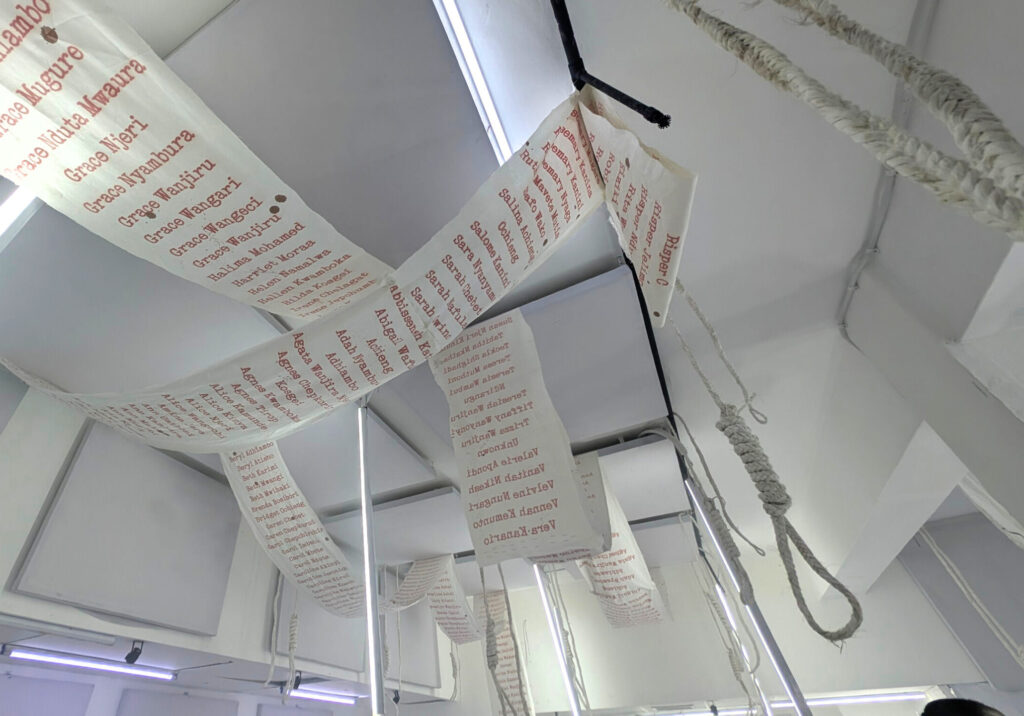
More women are remembered on lengths of cloth draped from the ceiling, stencilled with their names.
This is a difficult and upsetting, but necessary exhibition. It is coordinated by Usikimye, a trauma informed and survivor centered GBV organization, along with Creatives Garage and curated by Thayù, an award-winning multidisciplinary artist, whose work is rooted in social impact and artistic experimentation. Together they are openly confronting the pressing issue of femicide in Kenya, where there have been 129 recorded femicides in just the first quarter – 3 months – of 2025. That’s around 44 women killed per month. More than one femicide per day.
“Maskan” means dwelling or home in Swahili – a place that should be one of rest, laughter, and safety, yet for many women has become a place of violence, transformed into crime scenes. 72% of murders occur in the home, and 60 – 70% of victims were killed by intimate partners or family members.


Femicide remains a deeply troubling, under-addressed issue in Kenya. MASKAN both reflects the grief of gender based violence and amplifies the call for change.
Creatives Garage states that “This exhibition seeks to reinforce the severity of femicide in the country with real stories, sounds and visceral imagery. This is a raw, unfiltered way for us to see our reality. A space to remind us that our rights and freedoms rely on somebody’s whims and emotions.”
Audiences are encouraged to connect emotionally and viscerally, rather than just intellectually. This exhibition is an invitation to not only witness but to feel and to reflect.
MASKAN is at Creatives Garage, The Mall, Westlands, Basement Floor until Monday 18 July, 11AM–5PM daily (closed on Sundays).