

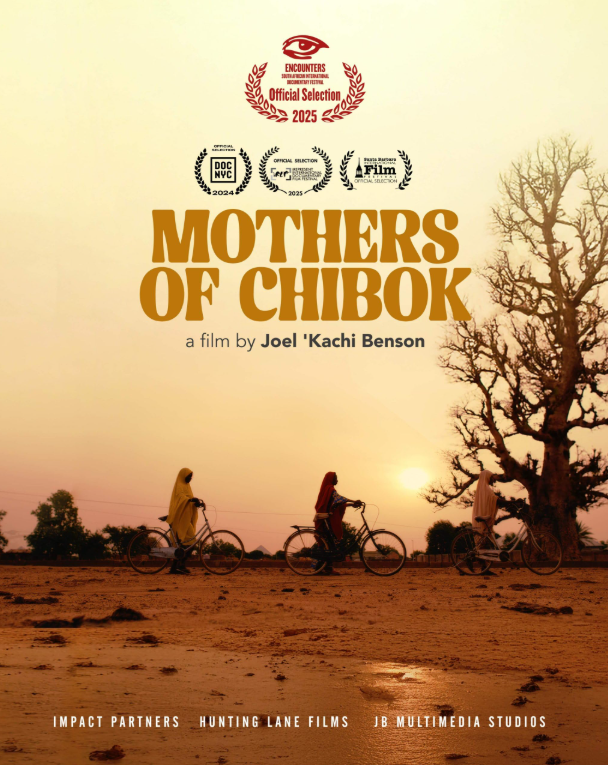

Mothers of Chibok — A Quiet Portrait of Strength Long After the Headlines
Then, as global attention inevitably does, it moved on.
What remained in Chibok were the mothers.

Mothers of Chibok, the new documentary from Nigerian filmmaker Joel ‘Kachi’ Benson, is not interested in recreating the horror of that night. It does something far more difficult. It asks what life looks like after the cameras leave, after the diplomats stop visiting, after the world’s empathy expires.
The answer is both devastating and quietly extraordinary.
The film follows several mothers whose daughters were among the 276 girls abducted by Boko Haram in April 2014. Ten years later, some of those girls have returned, many have not, and the uncertainty has hardened into a permanent feature of life. The women we meet carry that absence with them every day. But what Benson captures, with remarkable patience and restraint, is not simply grief. It is the daily rhythm of survival.
We see the mothers farming the red earth around Chibok, planting groundnuts and maize beneath the unforgiving northern sun. We see them walking long distances across fields, negotiating the price of crops at market, tending to younger children who still need school fees paid. These scenes are not staged for drama, they unfold with the unhurried honesty of real life. Farming, cooking, praying, waiting – etc.
The genius of the film lies in how ordinary everything feels.

In Western media, stories about Africa often arrive wrapped in spectacle. Crisis, conflict, despair. Benson rejects that entirely…instead he builds a portrait of women who have forcibly absorbed a tragedy of unimaginable scale and continued to stand upright within it. There is dignity in the way they work the land, humour in the conversations they share, and an unspoken understanding that their lives must keep moving forward even when closure never comes.

One of the film’s most powerful threads is education. The original attack targeted a girls’ boarding school precisely because education was seen as a threat, yet the mothers continue to send their children to school whenever they can afford it. Fees are scraped together from meek harvests. Books are purchased with money that might otherwise feed a household for weeks. Education, in this context, becomes something defiant, and powerful. A determined refusal to surrender to fear.
There is also an unexpected economic story woven into the film. During production, the documentary team partnered with the women to improve their farming
yields, introducing better seeds and agricultural support. What emerges from this is not just a film but a practical intervention that has allowed some of the mothers to produce groundnut products and generate income for their families. It is a rare example of documentary filmmaking that moves beyond observation into real impact.


What makes Mothers of Chibok so compelling, though, is its refusal to sensationalise. The abduction itself remains largely in the background, like a shadow cast across the entire community. Instead the camera lingers on faces, landscapes, and moments of quiet reflection. A mother looking out across her field. A conversation about a daughter who may or may not still be alive. A prayer offered into the vast silence of the countryside.
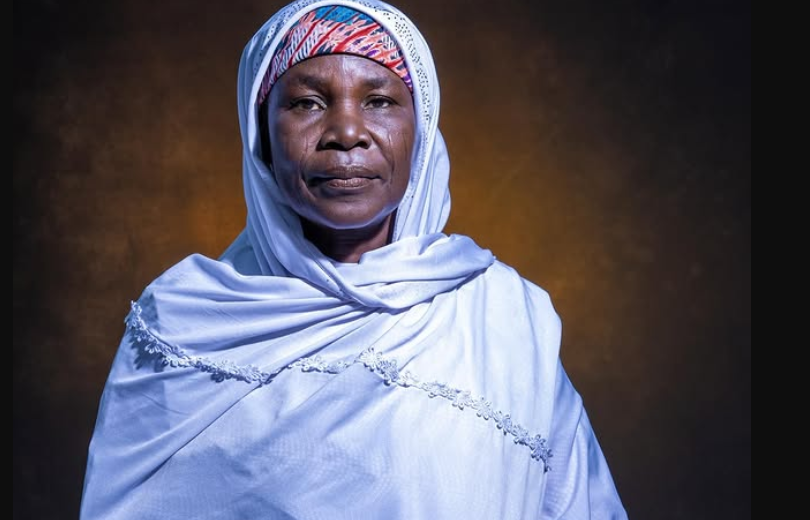
These moments accumulate slowly until the weight of the story becomes undeniable. Benson, who previously won an Emmy for his virtual reality documentary Daughters of Chibok, approaches this film with deep sensitivity. He spent years returning to the community, building trust, and it shows. The women do not perform for the camera. They simply exist within it. The result is a film that feels less like a documentary and more like being invited into someone’s life.
In a world that constantly moves on to the next crisis, Mothers of Chibok insists that some stories cannot be reduced to a moment in the news cycle. They unfold over decades, in the quiet endurance of people who wake up every morning and continue the work of living.
And in that sense, the mothers of Chibok are not simply symbols of loss, they are something far far more powerful, They are proof that strength does not always announce itself loudly. Sometimes it looks like a woman standing in a field, planting seeds, and choosing to believe that the future is still worth growing.
Mothers of Chibok is screening at Unseen Nairobi through March