

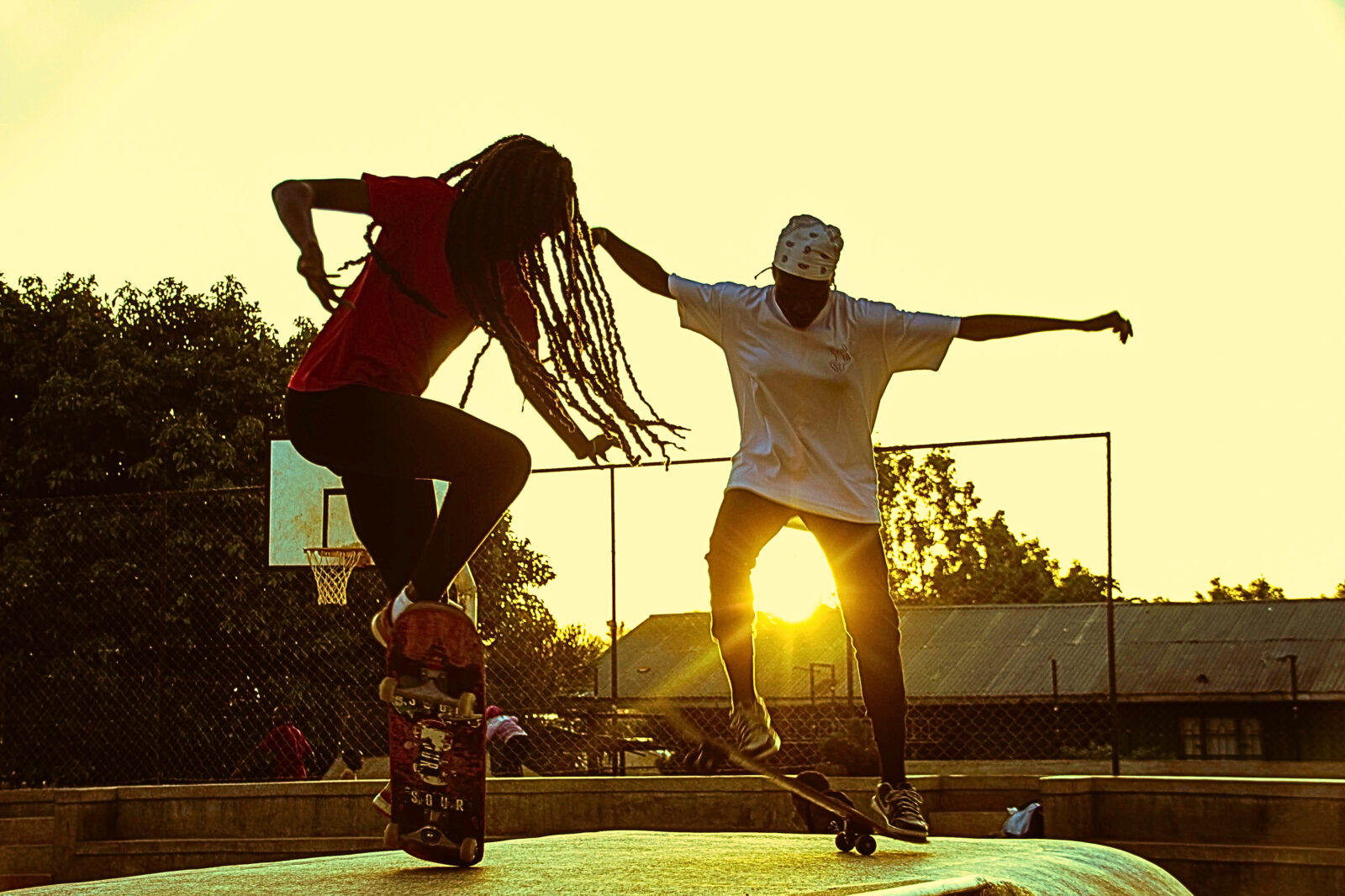

Girl Skate Nairobi is turning 2 years old. We at iN have been following this dynamic crew’s journey and we thought it’s high time they got a feature.
Girl Skate Nairobi is Kenya’s first female skate club – and only one of two. It’s a community of passionate girl skaters based in Nairobi, dedicated to empowering women through skateboarding. It all started when two young women—Jelimo Cheboi and Antoinette “Tonyii” Apondi met through the fragmented Nairobi skateboarding scene.
In their own words:
“What started as a response to the lack of safe, inclusive skate spaces for girls and gender-diverse youth in Nairobi has grown into a full-blown community. A sisterhood. A culture shift. We’ve picked each other up after every fall, turned pain into power, and we’re still skating with purpose.”
Cheboi told me that for her the story began when a (male) friend loaned her a skateboard. She often found herself skating alone, or alongside boys who sidelined any girls who were trying to skate. “It felt like a boys’ club,” she said, “there was a whole community, but there was no space for women in this community”. Events were organized by the boys, with no thought of including women or their needs. At that time there were scattered efforts for a cohesive female skater community — a WhatsApp group, sporadic meetups — but nothing stuck.
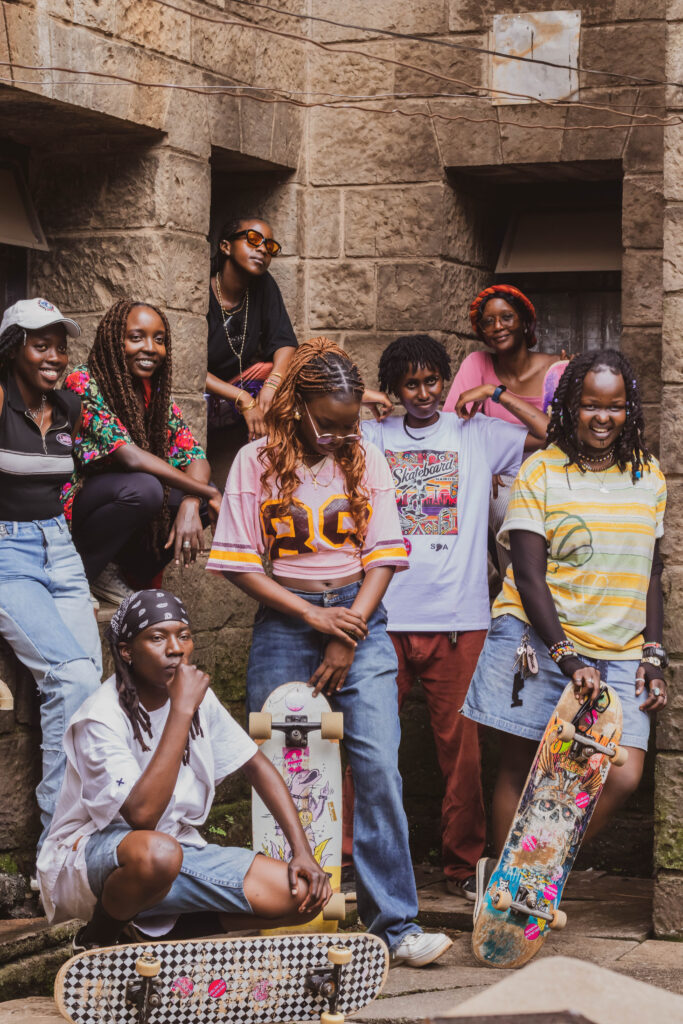
Cheboi said that the reason so few girls were skating is because they were intimidated by this all-male environment. She said that obviously when you are new to skating, you will make mistakes, fall down – the boys might laugh and tease, making the girls feel insecure and unsafe.
That’s when Cheboi met Apondi, a skater and graffiti artist who’d been carving through the concrete patriarchy long before skating became Instagrammable. “It was like, where have you been all my life?” Cheboi laughs. Their connection was instant, and the vision was clear: to build something for girls, by girls. To carve out space for women, girls, and gender diverse people to skate freely and without judgement in Nairobi. Women had talked about such a community before, but together Cheboi and Apondi had the passion to make it happen.
Building a Space to Belong
What emerged was Girl Skate Nairobi, a community where women and girls could feel safe learning to skate, without ridicule, gatekeeping, or intimidation. Training sessions are held regularly, mostly on Thursdays and Saturdays at Shangilia Skate Park, with an open call on Instagram inviting curious newcomers to join. Their content was intentionally inclusive.They didn’t just post videos of flashy tricks, they gave real, basic information that new skaters would need: how to get started, where to skate, where to buy gear.
What made their mission unique was that it didn’t stop at skateboarding. They quickly realized that many people—regardless of gender—felt like outsiders in Nairobi’s skate culture. Their space, though founded on female empowerment, organically became a home for anyone new, curious, or passionate.
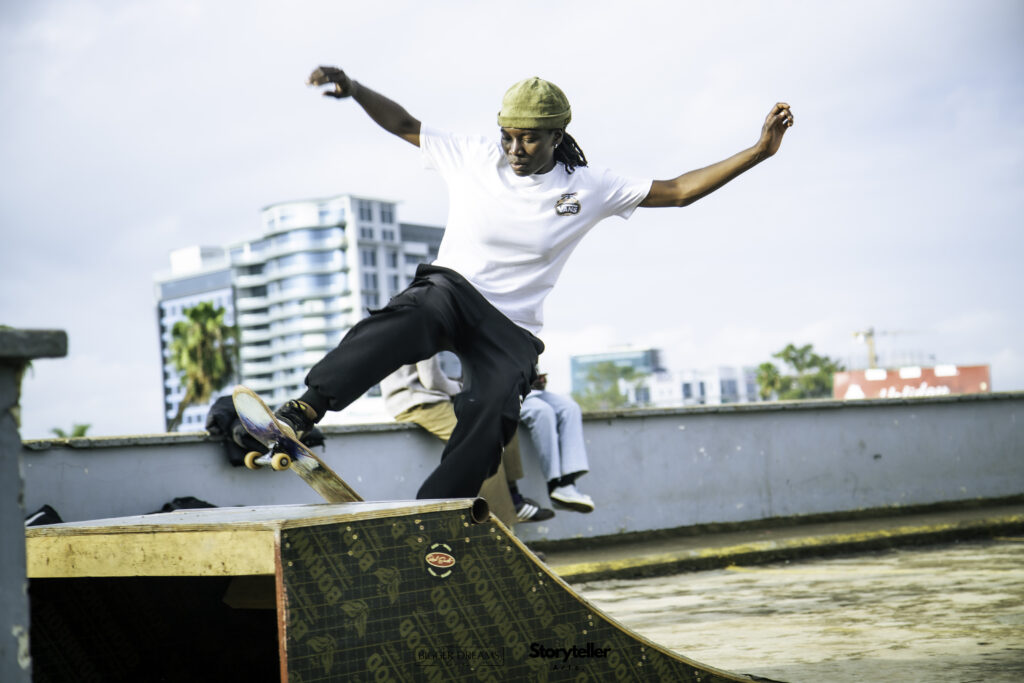
Antoinette “Tonyii” Apondi, who landed Kenya’s first ever female kickflip on camera
In 2023 Girl Skate Nairobi held their first skate jam, a skateboarding event with music, community, and competitions, which, for the first time in Kenyan skate history, included a women’s category. Not only their first event, this was also the first women-organized skate jam in Kenya. On top of it all, that day, Apondi landed Kenya’s first-ever female kickflip and it was caught on camera. The clip went viral, even catching the eye of American skate legend Tony Hawk, who shared it on his feed. This propelled the Nairobi-born sisterhood onto the global skateboarding map.
From Skate to Sound: Expanding the Culture
As the crew grew, now with around 20 volunteers, so did their vision. Frustrated by being pushed out of popular skate spots like The Mall Rooftop during commercial events, Girl Skate Nairobi launched Skate & Sound, a Friday sundown skate jam with live performances and DJ sets to encourage people to stick around after skating. “People used to just skate and leave,” she explains. “We wanted to create community.”
Collaborating with Santuri East Africa (an award-winning music innovation hub also based at The Mall) and a growing creative network, Skate & Sound stretched its hours and its reach. New faces started showing up, including non-skaters drawn in by the vibe—some eventually picked up a board themselves. Others came to perform, participate in sound workshops, or just experience the contagious energy of a scene in motion.
Skating Toward Equity
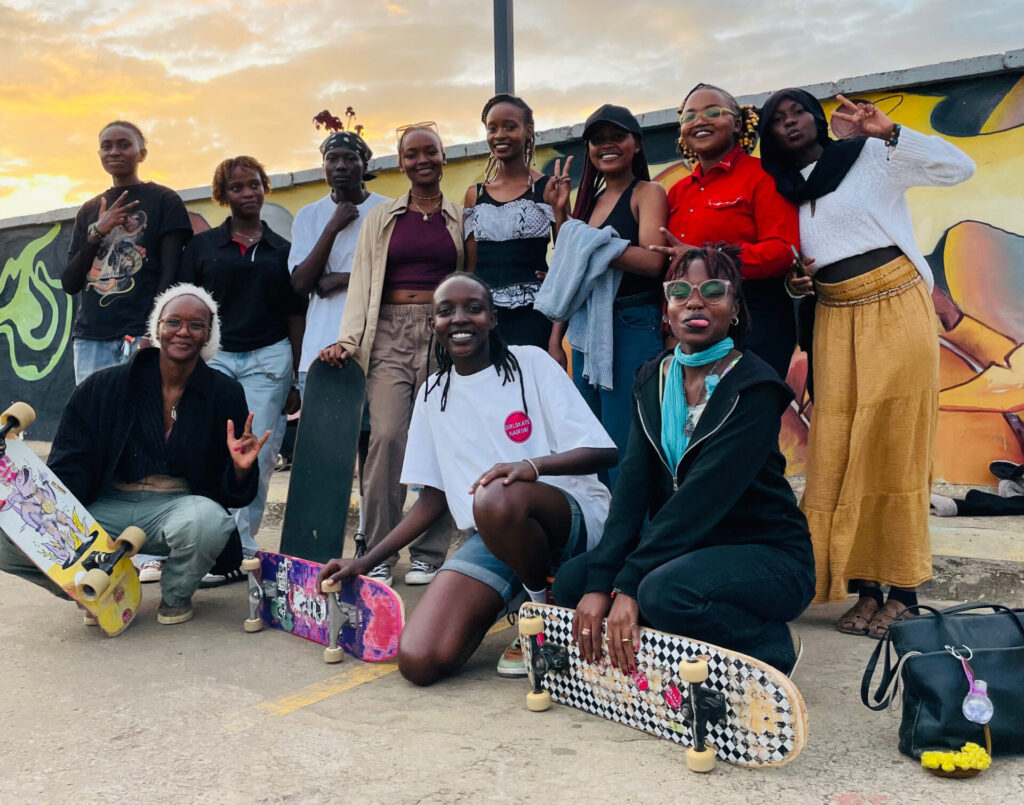
These events sparked more ideas for Chepoi and Apondi. Recognizing the lack of female DJs and sound engineers, Girl Skate Nairobi began partnering with Sound Sisters, a collective supporting women and non-binary creatives in the music industry. Through this initiative, just in the last year, over 15 women have received free training in DJing and sound engineering, skills often inaccessible due to high equipment costs and lack of mentorship.
They’ve also launched a gender empowerment programme, in conjunction with International Gender Equality leader Katie Carlson-Akuno. Carlson-Akuno is serving as mentor in their training programme, providing expert advice while Girl Skate’s programme trains young women who will in turn work with children aged 10 – 18 in schools in underserved communities.
“It’s not just about skating,” Chepoi says. “It’s about showing young women that they belong in any space—on the streets, behind the decks, in leadership.”
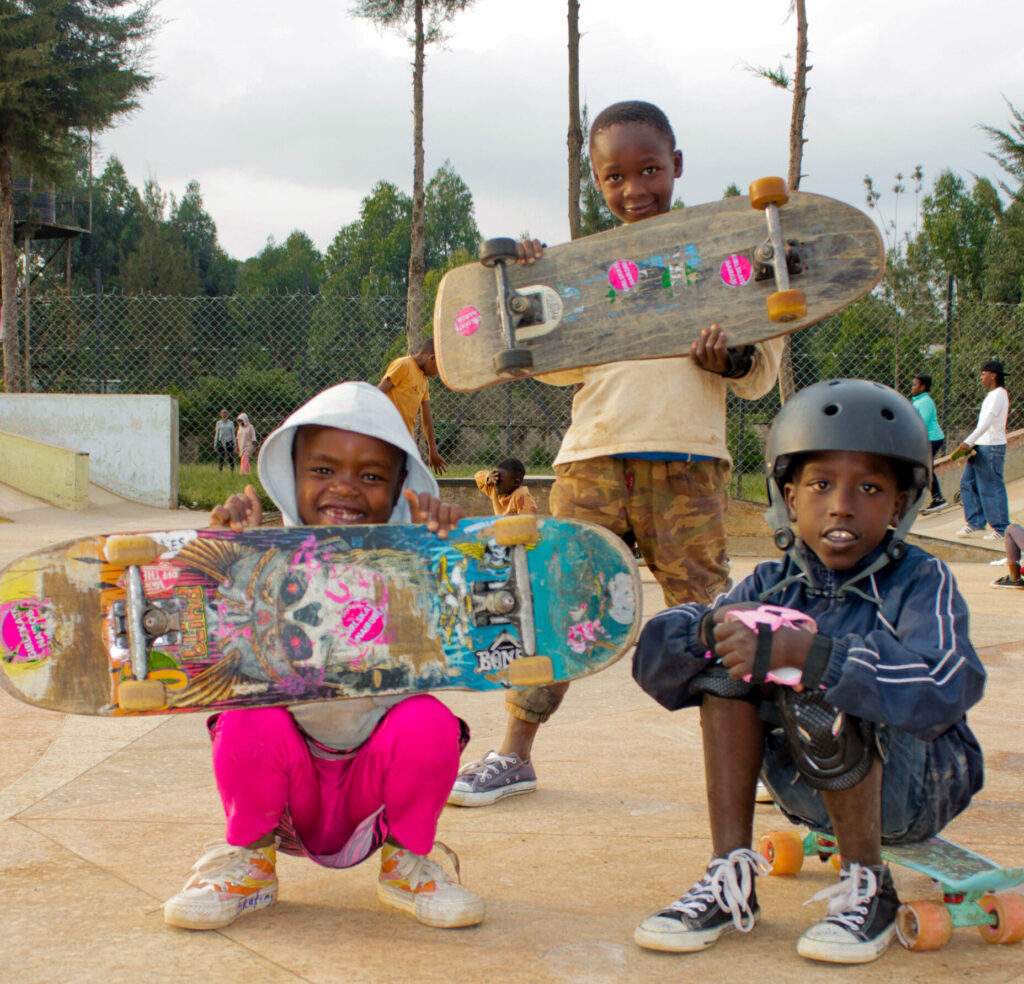
Chepoi described their interactions with young girls from the underprivileged community around Shangilia Skate Park. Because they’re around the area, the girls have learned some skating skills but were too shy to show them off. Chepoi said that the children had learned that as girls they should only sit and smile. Girl Skate encouraged them to bring their enthusiasm and energy both to skating and to their lives – to stand up and be empowered. Now girls as young as 4 years old are excited to come and skate after school.
Beyond Nairobi: Spreading the Movement
With funding from the Australian High Commission in 2024 they were able to fulfil a dream: to teach kids, especially those from under privileged backgrounds. Over a span of three months they were able to reach around 100 children. In the last year, Girl Skate Nairobi has taken their mission on the road, hosting the first-ever skate jam in Nakuru.
Even with limited gear — mostly donated, second-hand boards — they’ve sparked growing micro-communities across Kenya. The next place Girl Skate has their eye on is Lamu. At the last Nairobi Design Week Cheboi came across Ubunifu Lamu, whose mission it is to integrate cultural and creative programming into the everyday lives of vulnerable children. Seeing the products that the children had created through Ubunifu’s programmes, Cheboi said,
“I just got curious, and I thought about how skateboarding can really open someone’s mind, especially for underprivileged kids who live somewhere so far from the rest of the world – it’s true, most of these people have never seen a skateboard.”

She began thinking about how easily the young learn new skills and about how empowering skateboarding can be. She thought this could be especially empowering somewhere like Lamu where conservative culture discriminates against girls and women.
“That is our main goal. We just want girls to feel seen and to feel like they have a voice; they can occupy spaces without shrinking and feeling like “I’m a girl, I shouldn’t show people that I can skate”.
Girl Skate’s ultimate goal is now the Olympics. Cheboi admitted that for her and Apondi it’s too late, but they hope to raise up a generation of Kenyan girls, through their training and empowerment programmes, who will be Kenya’s chance on the world stage of competitive skatboarding.
Skate. Sisterhood. Social Change
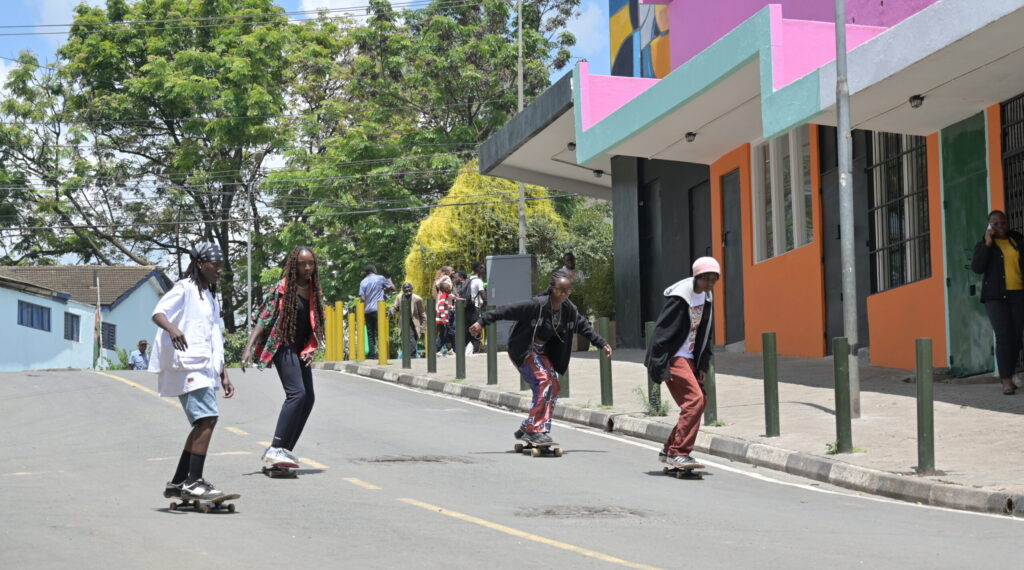
Over the last two years, Girl Skate Nairobi has appeared in international media and secured grant funding to sustain their vision. But through it all, they’ve remained grassroots and free to access, charging only for private lessons and using proceeds from stickers, pins, and merch to help fund their projects.
This weekend’s skate jam – Thursday and Friday at The Mall Rooftop – will be a well-deserved celebration, for the skaters, the rebels, the creatives, the curious ones, the volunteers, and the ones who show up even when no one’s watching. This is more than a party . It’s a tribute to every girl who dared to take up space and to the movement that’s only just beginning.
What began in 2023 as a longing for sisterhood in an overwhelmingly male-dominated scene has evolved into a radical movement reimagining Nairobi’s urban culture through skateboarding, art, music, and community empowerment. Girl Skate Nairobi is not just about skating, it is flipping narratives and opening communities that were once gatekept and gendered.
Cheboi puts it best: “I thought we were just trying to skate. I didn’t realize we were starting a revolution.”
Follow Girl Skate Nairobi on Instagram @girlskate_nairobi to join a session, sign up for a workshop, or just see the cool stuff they’re doing. You can find their website at www.girlskatenairobi.co.ke.
While the team has some support from a Pushing Against Racism Fund grant for the Ubunifu Lamu training programme, the reality is that they still urgently need funding towards: Skateboards & safety gear for beginner skaters; Movable skate obstacles to create pop-up skate areas; Logistics support to transport materials and run the programs sustainably. If you can help Girl Skate Nairobi, please get in touch via their website contacts.