


Voice of the Free: Bam Bam and the Revolutionary Echo of Sister Nancy
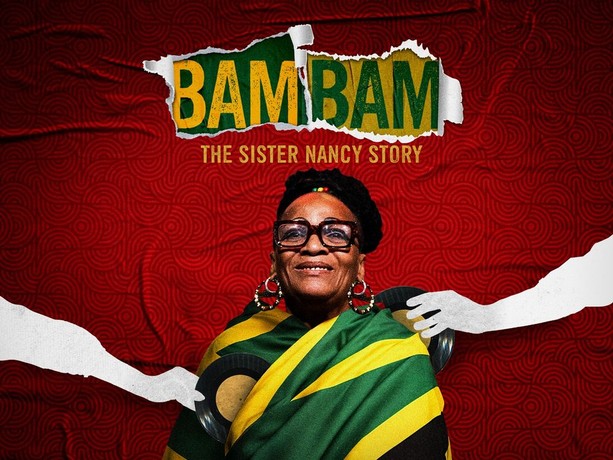
There are voices that change music, and then there are voices that change memory. Sister Nancy’s is both. In Bam Bam: The Sister Nancy Story(produced by Ngardy Conteh George and Alison from Oya Media Group), director Alison Duke doesn’t just trace the life of the first female dancehall DJ — she tunes into a frequency where sound becomes resistance, and survival becomes rhythm.
Most know Sister Nancy for Bam Bam, the 1982 anthem that refused to fade. Sampled hundreds of times, from Kanye West to Jay-Z to Main Source, the track became a ghost — omnipresent but uncredited, beloved but estranged from its maker. This documentary reclaims the voice behind the echo.
(continues after video)
Duke approaches the film not as hagiography, but as reparation. With archival footage, patient closeups, and Sister Nancy’s own sharp narration, Bam Bam unfolds with the quiet authority of a woman finally being heard on her own terms. Born Ophlin Russell in Kingston, Jamaica, Sister Nancy emerged from a deeply patriarchal music culture, one where sound systems were governed by men and female presence on the mic was, at best, novelty — at worst, rebellion.
The documentary dwells in the tension between her soft-spoken humility and the seismic impact of her work. We see her rise, we feel her exile — from Jamaica to New Jersey, from fame to obscurity. And yet, the film resists the typical arc of celebrity downfall and redemption. This is not about spectacle. It is about voice — and the systems that seek to silence it.
The story of Bam Bam, the song, is its own kind of parable. Released without fanfare, denied royalties for decades, and yet, it travelled. It became a chorus in global Black culture. The beat migrated, the voice remained. That Sister Nancy had to fight — and win — her legal battle for ownership feels like poetic justice, but also like a quiet indictment of an industry that so often erases the very women who birth its sound.
Visually, the film is sparse, intimate, preferring close listening over visual acrobatics. It feels deliberate. This is a story told through cadence, repetition, dub. The documentary is scored like a sound system set: bassline first, then story, then uplift.
What Bam Bam ultimately delivers is a politics of presence. Sister Nancy never screamed her way into history. She spoke plainly. She sang. She chanted. And the world came back around.


She says, near the end of the film, “I never knew I was making history.” The brilliance of Bam Bam is in showing how history was always humming beneath her voice — steady, resilient, undaunted.
Screening this July at Unseen Nairobi
Tickets on Moohk
Watch the Trailer