


# Nairobi After Dark
Italian artist Franz Cerami is bringing his video mapping magic to the city this week, and you won’t need a ticket.
If you happen to be out in Nairobi on Thursday or Friday evening and something catches your eye (a face glowing on a wall, a building that suddenly looks different), don’t be alarmed. That’s Franz Cerami doing what he does best.
The Neapolitan artist has been lighting up cities for decades. Naples, São Paulo, St. Petersburg, Tokyo, New Delhi. He has projected his work across the facades of castles, embassies and cultural landmarks on just about every continent. This week he turns his attention to Nairobi, and the results should be something to see.
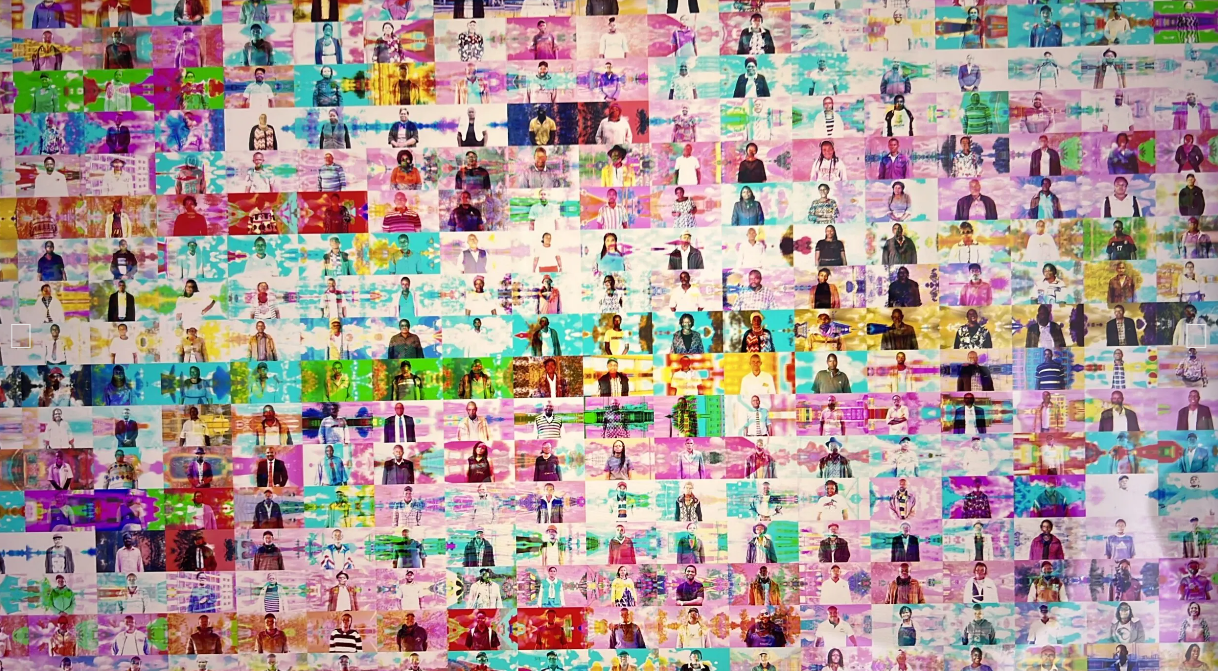
Cerami’s practice is built around people. He’s not interested in abstract light shows or corporate spectacle. What he does is make portraits, then find ways to give them back to the city. The faces he projects tend to belong to communities that don’t often find themselves on gallery walls: workers, labourers, people whose hands keep things running. His technology is high-end; his instincts are deeply human.
The Nairobi project is called Jute Portraits, and it grew out of a residency he did here in March. For two weeks he spent time with the workers who make up Kenya’s coffee value chain: the farmers, the processors, the people behind one of the country’s most important industries. He photographed them, listened to them, and built the material that will become this week’s projections. He also ran a workshop at Kenyatta University, working with students and explaining his process, which is rooted in the idea that the people in the portraits are collaborators, not subjects.
On the evenings of 28 and 29 May, those portraits go onto the streets. Different spots around the city, no set programme. Part of what makes video mapping work is the element of surprise: a familiar wall suddenly host to something unexpected. It’s free, it’s open to anyone, and it’s very much worth stepping outside for.

The project runs through to early June, closing on Italian National Day (2 June) with a larger installation at the Italian Ambassador’s Residence, where the portraits will be projected onto a structure of jute, bamboo and rope put together by local Kenyan craftspeople. That one’s a private event, but the street projections this week are for everyone.
Cerami has been doing this long enough to have refined it into something genuinely moving. The coffee workers of Kenya are about to find their faces on the walls of their own city. That’s worth staying out late for.
Jute Portraits is a project of the Italian Cultural Institute of Nairobi and the Embassy of Italy in Kenya, supported by UNIDO and AICS Nairobi.