

In a world that moves too fast and often forgets to look, Jane Goodall lived deliberately—she cultivated wonder, kindness, and a deep listening in every moment. Her life invites us to aspire not just to achievements but to a way of being: seeing, caring, acting.
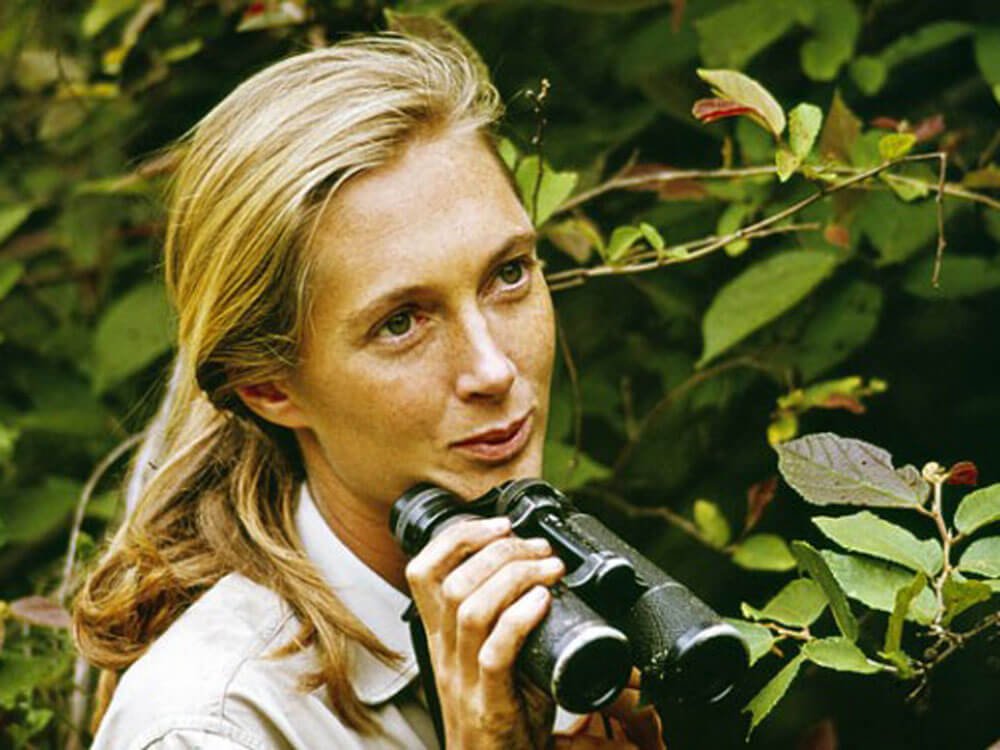
Childhood & Personal Roots
Born Valerie Jane Morris-Goodall in London in 1934, Jane was a dreamer from the start. As a child, she collected animal stories and observed creatures with a gentle, persistent curiosity. Her father gave her a toy chimpanzee named Jubilee, which she kept for the rest of her life—a symbol of her lifelong bond with the natural world.
Though she would become one of the most recognisable figures in science, Jane’s early life was quiet and introspective. She spoke often of being shy, yet also of feeling a deep fire inside – a longing to live among animals, to listen to the wilderness, to understand it not through textbooks but through time and empathy.
Her personal life, like her career, was marked by passion and courage. In 1964 she married wildlife filmmaker Hugo van Lawick, with whom she had a son, Hugo Eric Louis. The marriage eventually ended, but their partnership produced some of the most beautiful wildlife photography ever captured. Years later she married Derek Bryceson, a Tanzanian politician and conservationist, who helped protect her research site in Gombe before his death in 1980. Despite loss, she carried on with characteristic grace and purpose.
The Work That Changed the World
Jane’s scientific career began in the late 1950s in Kenya, where she arrived with no formal qualifications—only curiosity and conviction. Working in Nairobi, she met the renowned archaeologist Louis Leakey, who saw in her the qualities that science could not teach: patience, observation, empathy. It was Leakey who sent her to study wild chimpanzees at Gombe Stream, on the shores of Lake Tanganyika in Tanzania.
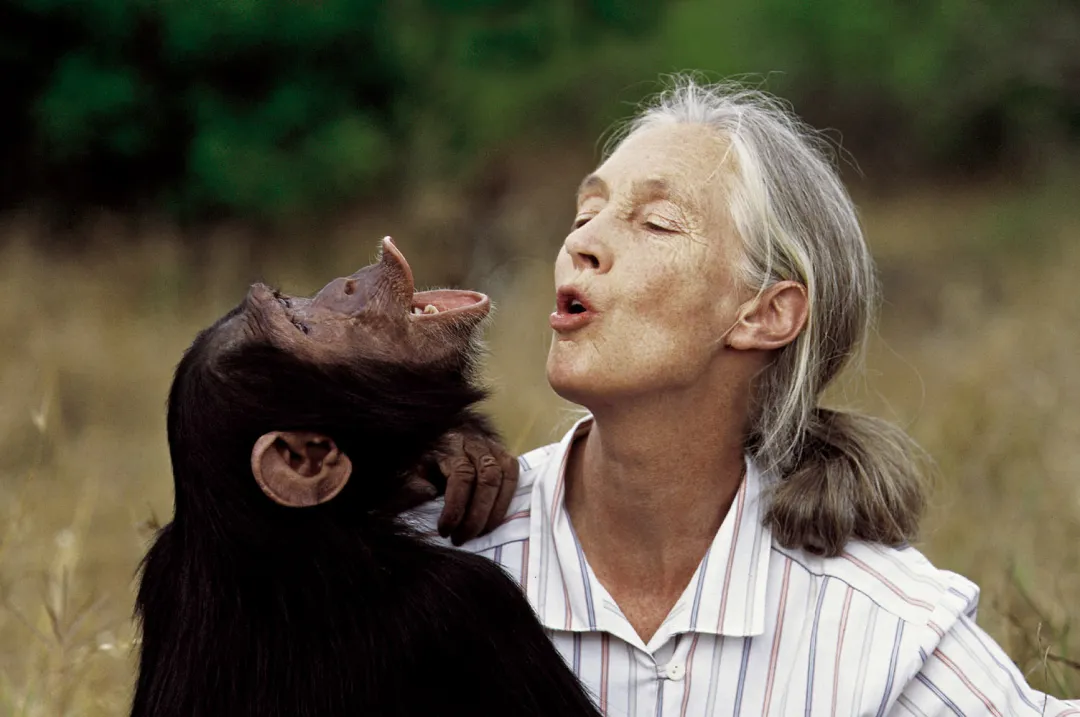
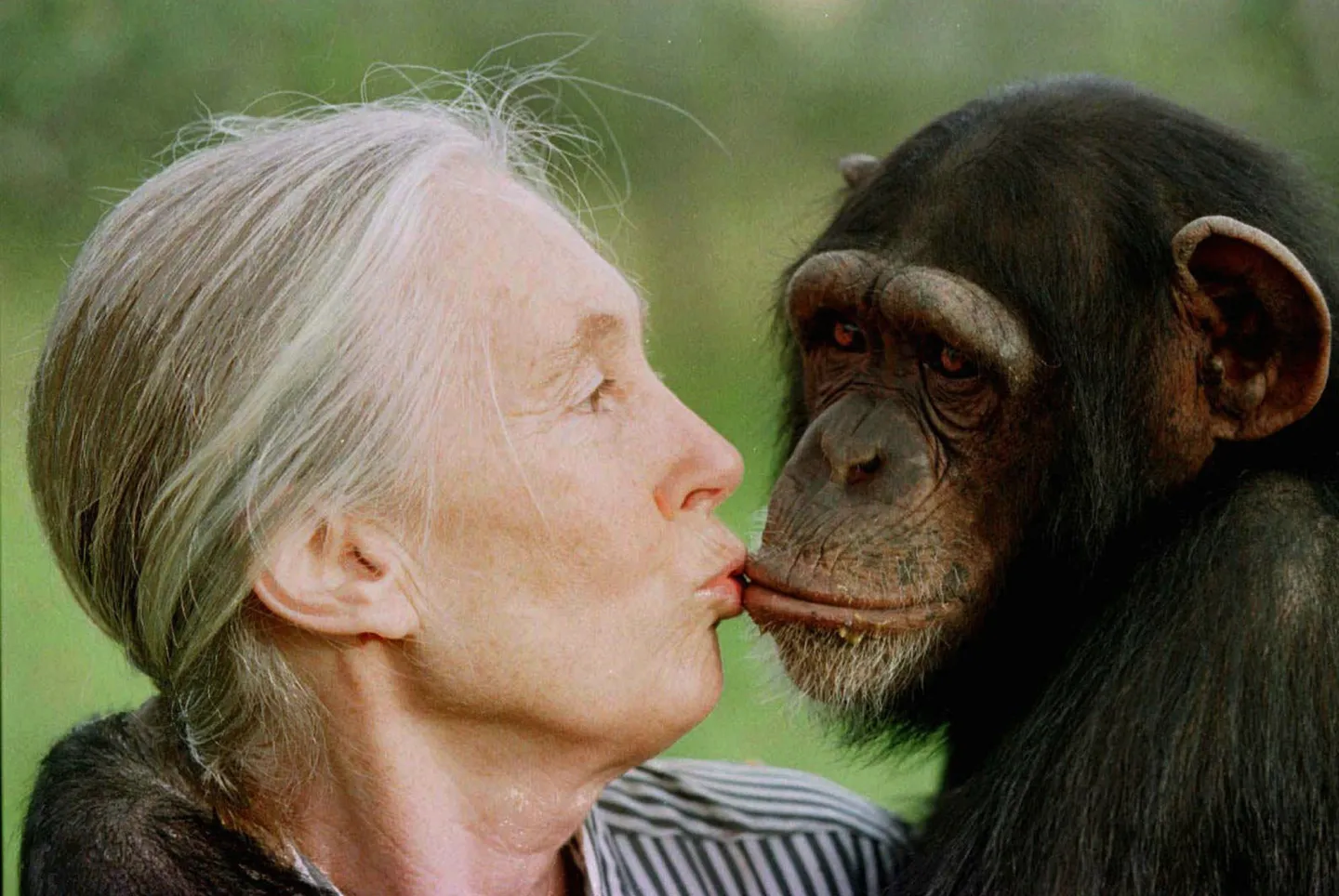
What she discovered there changed everything. She observed chimpanzees making and using tools, hunting, showing affection, jealousy, even grief. She gave them names instead of numbers – David Greybeard, Flo, Goliath – and in doing so, she quietly challenged one of the most enduring beliefs in science: that humans were the only species capable of culture, emotion, and self-awareness.
Her observations bridged a chasm between humans and the animal world. For the first time, the public saw that our cousins in the forest were not so different from us—that they, too, had families, rituals, and hearts capable of joy and pain.
But Jane was never content to leave her work in academic journals. She became an activist, a speaker, and an unrelenting advocate for compassion in science and in daily life. In 1977 she founded the Jane Goodall Institute to continue her research and to protect chimpanzee habitats. She later launched Roots & Shoots, a youth movement encouraging young people to take action for animals, people, and the environment.
Kenya: Where It All Began
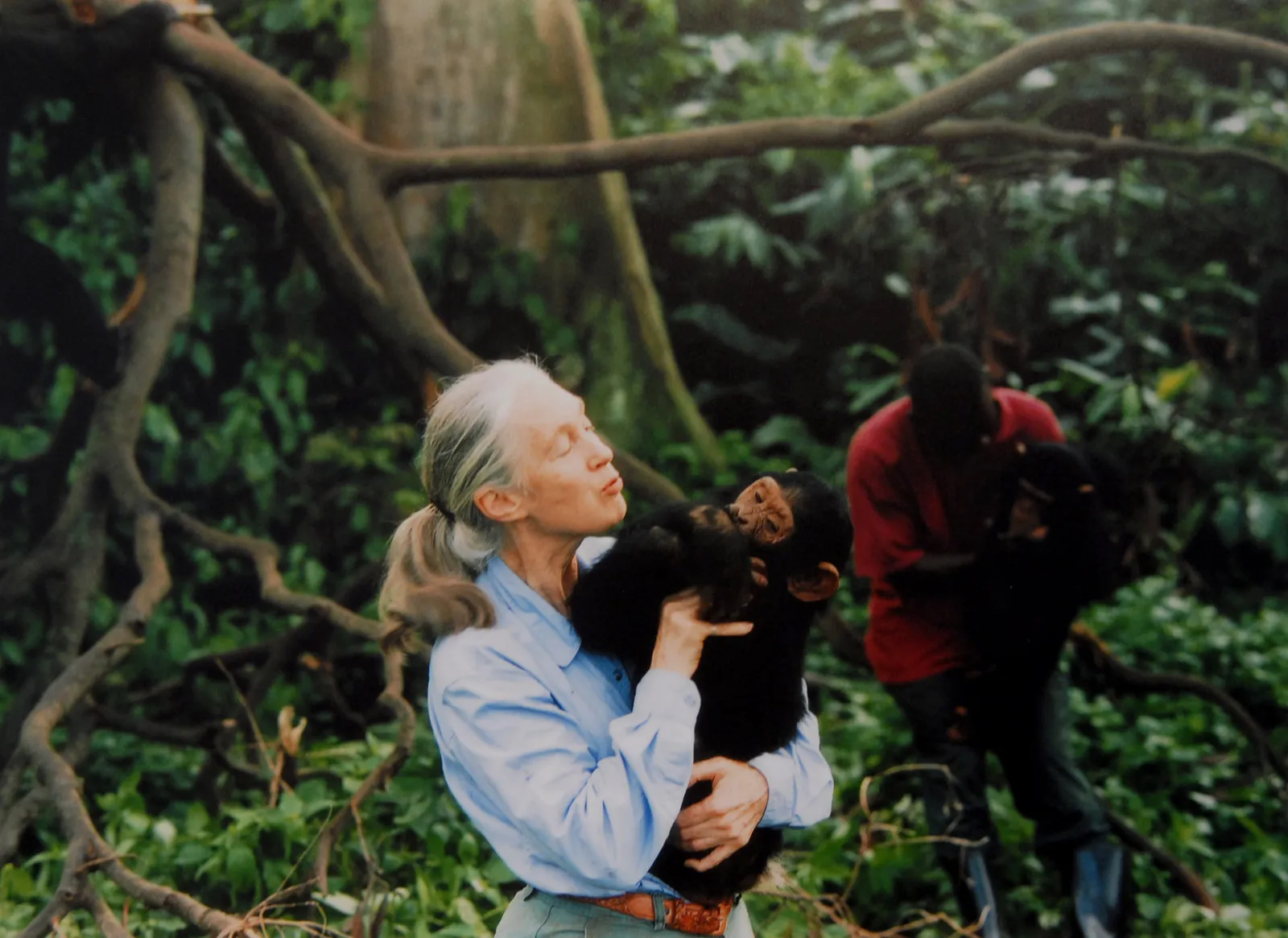
Kenya was the gateway to Jane Goodall’s destiny. It was in Nairobi, at the old Coryndon Museum, that she first met Leakey and entered the world of professional research. The city’s academic and natural-history circles gave her the first tools, networks, and confidence to begin her life’s work.
Her time in Kenya also exposed her to the continent’s evolving conservation challenges. The tension between progress and preservation, human need and wild survival. Over the years she maintained deep ties with Kenyan scientists, educators, and activists, often visiting to lecture, mentor, and inspire. Her message—that true conservation begins with respect, empathy, and shared responsibility—continues to shape environmental thinking across Kenya today.
Later Years
Even in her later years, Jane never slowed down. Long after most people would have retired, she was travelling over 300 days a year, speaking to schoolchildren, world leaders, and local farmers alike. She advocated for reforestation, ethical consumption, and community-driven conservation.
What made her message resonate was its simplicity: that every individual matters, and that hope is a form of action. She refused to let cynicism replace optimism, even as the planet faced deforestation, climate change, and loss of species. She reminded us that small, consistent acts of care—planting a tree, rescuing an animal, educating a child—can build an unbreakable chain of change.
The Final Chapter
Jane Goodall passed away peacefully in 2025 at the age of 91. The world mourned not just a scientist but a moral compass. Her death marked the end of an era, but also the continuation of a movement she had sparked decades before. Tributes came not only from presidents and institutions, but from students, forest rangers, and communities across Africa who had been touched by her belief that kindness is the truest form of strength.
Even in death, her spirit endures. It is etched in the chimpanzees that still roam Gombe, in the youth projects she inspired around the world, and in the millions who continue her work with quiet resolve.

The Goodall Way
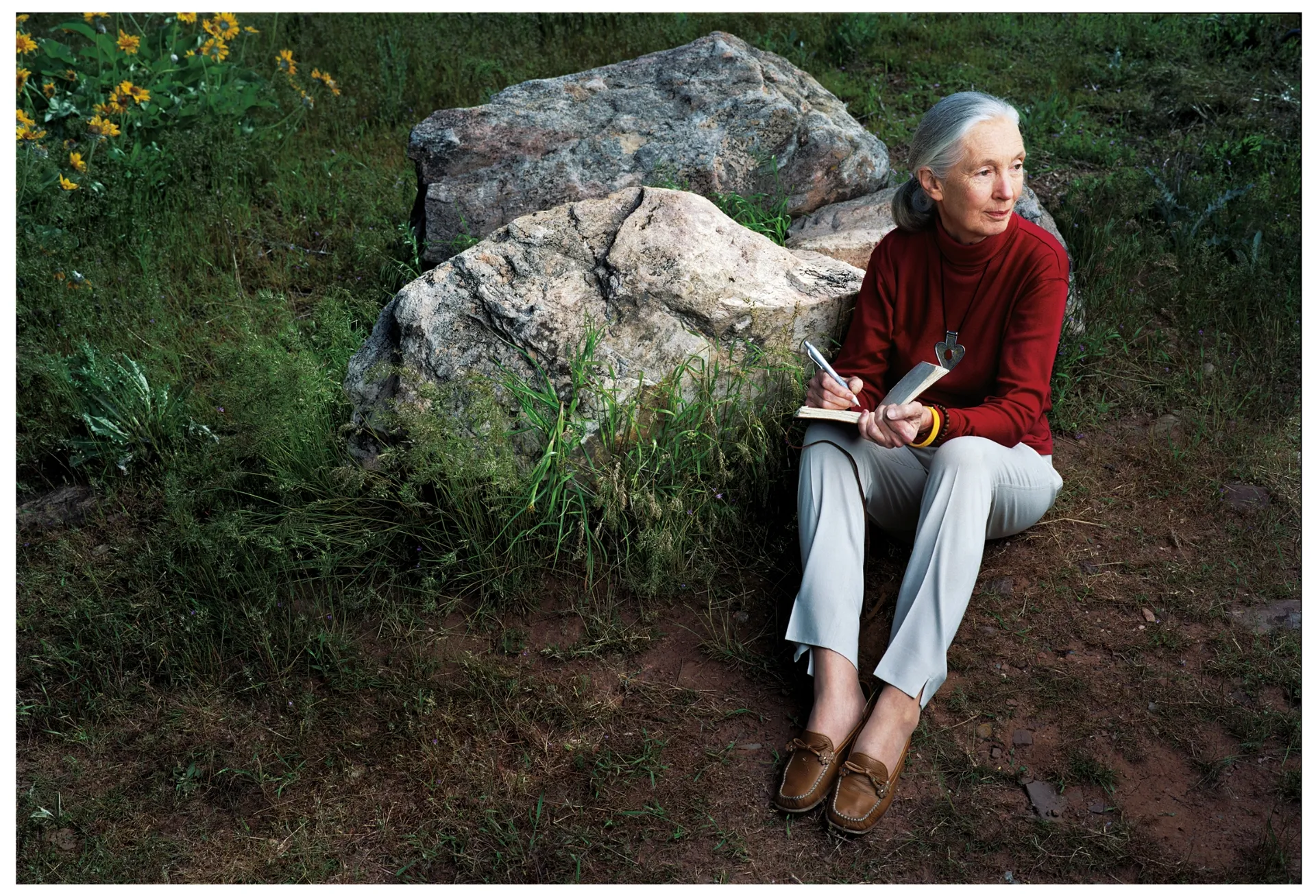
Jane Goodall’s life teaches us something profound: that greatness is not measured in wealth or power, but in the ability to notice, to nurture, and to care. She lived not against nature but within it. She looked at a leaf and saw a miracle. She met strangers and offered grace. She chose empathy as her default setting.
To live a “Goodall Life” is to practice tenderness in a world that too often rewards indifference. It is to believe that beauty exists everywhere, if only we slow down enough to see it. It is to act with courage, to speak softly but persistently, and to leave every place, every person, every moment a little better than we found it.
Jane Goodall may be gone, but the path she walked remains open to all of us. The Goodall Life is a calling—to be kind, to stay curious, and to keep listening to the world, because the world is still speaking.