



There are some stories that feel bigger than the stage and Too Early For Birds has built its reputation on telling exactly those. Taking pride in Africa’s oral traditions, their practice is centred in orature, the primary form of handing down African wisdom and kwimenya (self-knowledge). Too Early For Birds continues to fashion storytelling to address today’s issues and this coming weekend, their storytelling series returns for its 9th edition, turning its gaze to one of Kenya’s most impressive figures: Wangarĩ Maathai.
Titled Shawry for Trees: The Roots of a Revolutionary, the production runs from April 10–12 at Jain Bhavan Auditorium, with five performances across the weekend. If past editions are anything to go by, this is a near-certain sell-out.
Maathai’s story is the stuff of legend built around her grassroots resistance. A scientist and the first woman in East and Central Africa to earn a PhD, she went on to found the Green Belt Movement in 1977 which mobilised rural women to plant millions of trees across Kenya sparking a grassroots movement linking land, livelihood, and political agency.
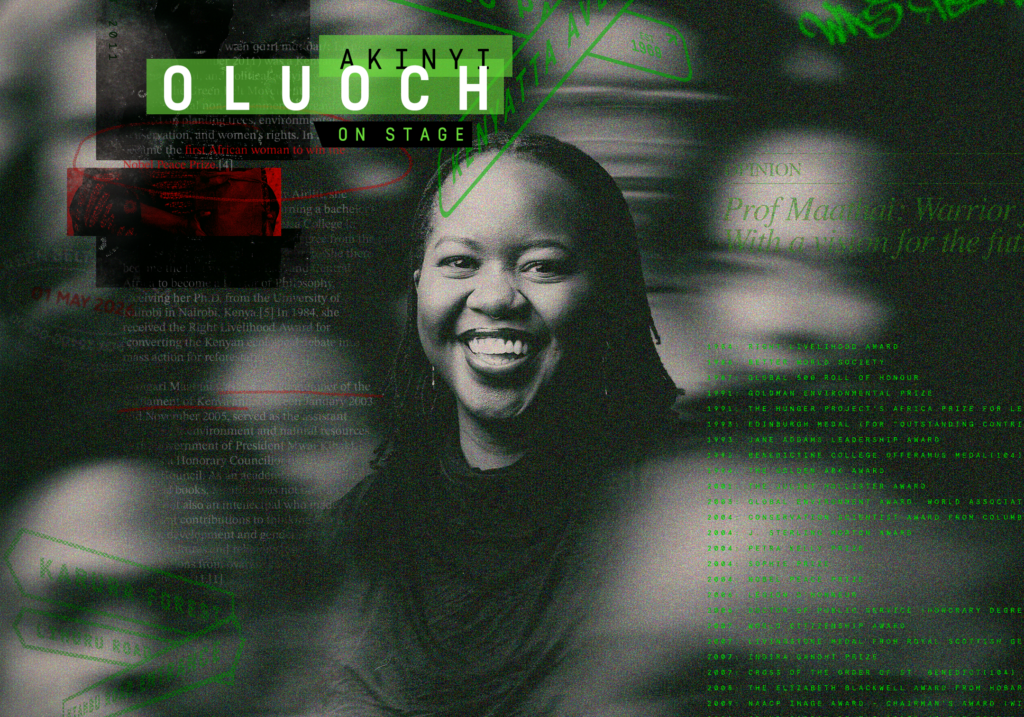
Maathai stood at the intersection of ecology and democracy, challenging land grabbing, state violence, and authoritarian rule at a time when doing so came at great personal cost. Arrested, beaten, and publicly vilified, Maathai refused to back down, famously protecting Uhuru Park from development via campaigns, including hunger strikes, to stop the government from constructing a 60-story tower in the recreational green space. She of course also amplified the voices of women who were often left out of national narratives. In 2004, she became the first African woman to receive the Nobel Peace Prize, cementing her place on the global stage, though her work had always been rooted firmly at home.
Shawry for Trees isn’t a straightforward biographical retelling. True to form, Too Early For Birds leans into its signature blend of orature, irreverence, and sharp contemporary commentary to unpack Maathai’s life. They present not just the accolades, but the contradictions, coincidences, and cultural forces that shaped her. Expect a layered portrait of a mother, professor, activist, politician, and, as the writers cheekily frame it, an “original baddie.”
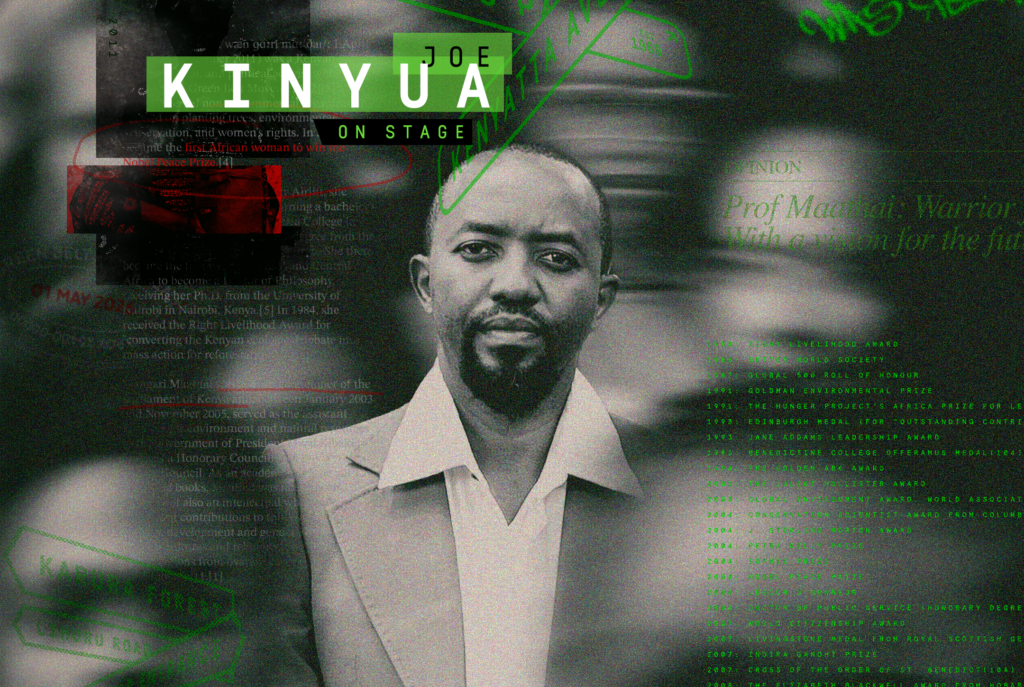
The show is written by Abigail Arunga, Wacuka Mungai, and Ras Mengesha, edited by Ndinda Kioko, Martin Kigondu, award-winning Kenyan theatre and filmmaker, and produced by Sheba Hirst. It draws from the deep research of Ngartia, Kĩmemia Macharia, Nyagũthiĩ A. Murage, Meran Randa and Mũthoni Mwangi while staying rooted in oral tradition, reclaiming storytelling as a living, evolving practice. Many of the creators come from communities shaped by the very movement Maathai built, adding a layer of lived memory to the performance.
The cast for this edition of Too Early For Birds brings together a dynamic mix of emerging and established performers, each with a distinct voice shaped across stage and screen. Performers like Shiviske Shivisi—with over a decade of experience spanning theatre, film, and television—and Joe Kinyua, a familiar face in both local productions and international projects, anchor the ensemble with depth and range. They are joined by a new wave of storytellers including Diya Vaya, Charles Gachanja, and Miss Kahiro, whose work spans theatre, film, and digital platforms, alongside multidisciplinary creatives like Red Brenda, Karimi Rimbui, and Sam Arlcons. Together, the ensemble reflects the versatile spirit of the production itself bringing fresh energy and emotional nuance to the retelling of Wangarĩ Maathai’s legacy.
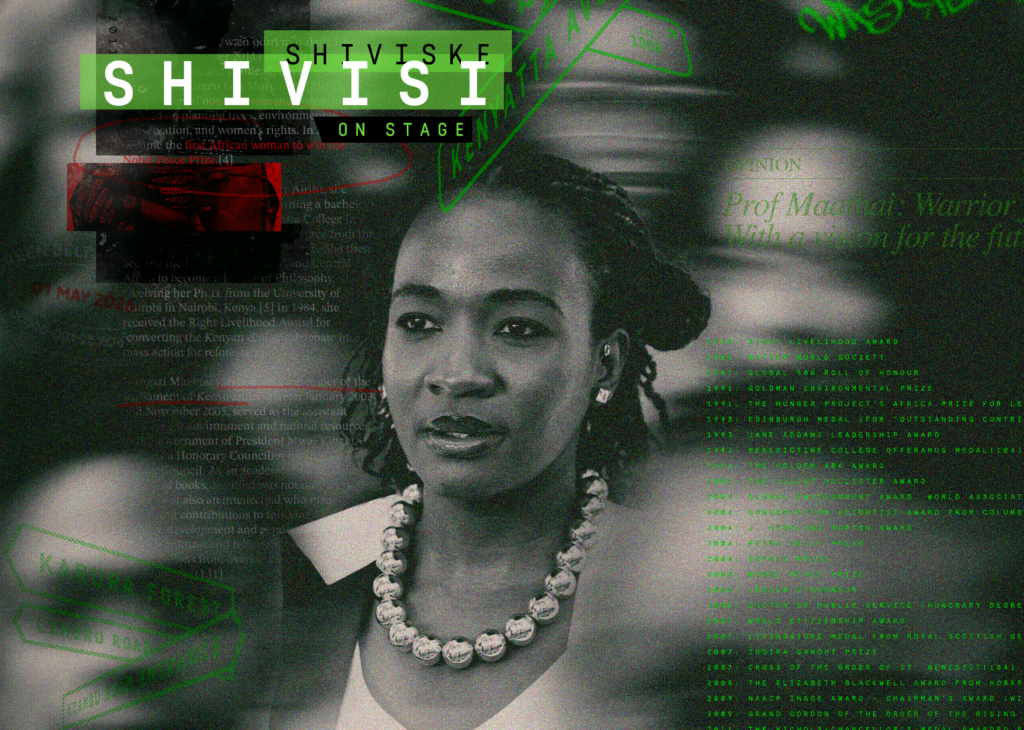
Since its debut in 2017, Too Early For Birds has presented Kenyan history for a new generation, spotlighting figures from Tom Mboya to Field Marshal Muthoni wa Kirima with a style that’s as entertaining as it is incisive and anchored in a legacy that still shapes the present.
Wangarĩ Maathai is famous for protecting trees but this production shows that her story encompasses much more. It talks about power, persistence, and the radical idea that ordinary people, the people the politicians often ignore, and especially women, are those who are instrumental in reshaping the future.
Shawry for Trees: The Roots of a Revolutionary – Too Early For Birds


Jain Bhavan Auditorium
Friday 10 April | 7pm
Saturday 11 April | 2pm & 7pm
Sunday 12 April | 2pm & 7pm